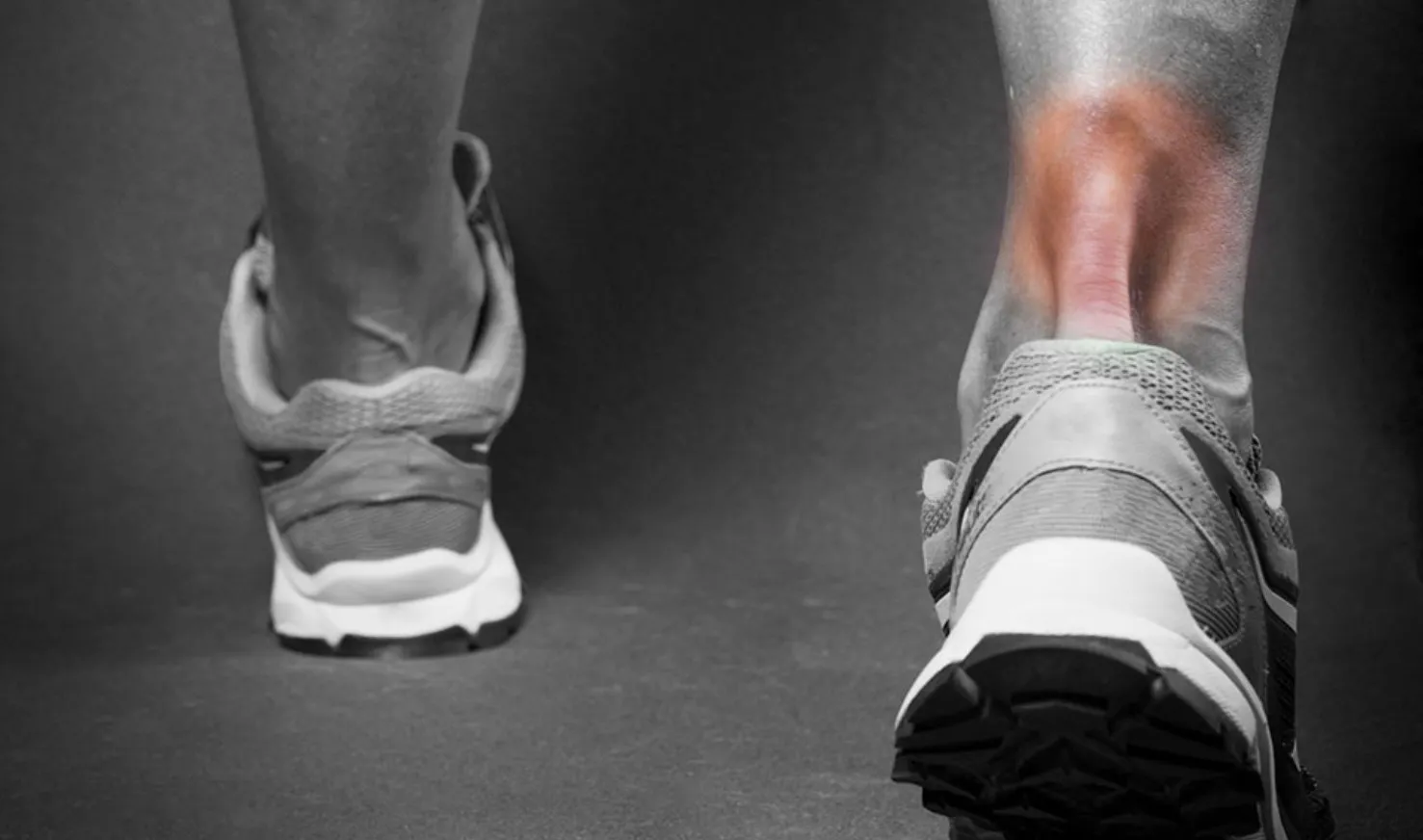
Tendon inflammations and pathologies
Tendons are very strong, smooth, flexible structures that connect muscles to bones.
- Topic
- Joints and tendons
- Reading time
- 4 minutes
Tendons are very strong, smooth, flexible structures that connect muscles to bones.
When a muscle-tendon unit is often under strain, inflammation can develop. This is called tendinitis: micro-tears in the tendon tissue caused by repeated stretching. Tendinitis is most often seen in the Achilles tendon, around the knee and in the biceps tendon. Further strain can lead to a tendon rupture, especially at stress points such as where the tendon passes over a bone, and can cause swelling and pain. Some tendons, for example in the hands and wrists, have a protective covering called a synovial sheath. Tenosynovitis can occur when the tendon sheath becomes inflamed, possibly linked to a lack of the synovial fluid that lubricates it; it can be caused by repetitive movements. A tendon strain is an injury of the muscles, ligaments and tendons around a joint that does not break their anatomical continuity; it is graded by severity as first, second or third degree. Overuse injuries are long-term, repeated overloading of tissues that happens when the physical load does not match the athlete's capacity, because of incorrect or biomechanically poor exercise technique, a negative environment or fatigue. They show up as inflammation, swelling, pain, feeling unwell, poor movement quality and reduced sports form.
The most common tendon conditions
Tennis elbow (epicondylitis) · Golfer's elbow (medial epicondylitis) · Achilles tendon pain/inflammation (Achilles tendinitis) · Inflammation of the plantar fascia (plantar fasciitis) · Jumper's knee (patellar tendinitis)
The main causes of tendon inflammation and other tendon conditions
Analysing the causes, mechanisms and risk factors of injuries, they can be divided into two categories: endogenous (internal) and exogenous (external). Injuries are often caused not by one but by several factors:
Endogenous: sex, age, insufficient general fitness (endurance, flexibility, skill, strength, speed), build (tall height, excess weight), psychological factors (emotional balance, motivation), muscle imbalance, some diseases (diabetes, cardiovascular disease), congenital or acquired reduced tissue resistance, poor static posture, flawed training, an insufficiently healed injury, etc. Fatigue, overestimating one's own capacity, lack of discipline, carelessness, a full stomach, illness. Acute or chronic disability, medication, alcohol.
Exogenous: excessive physical loads on the musculoskeletal system (type and speed of movement, number of repetitions, footwear, surface), training mistakes (too long a distance, increasing the load too quickly, high intensity, uphill work, training while tired), environmental conditions (darkness, heat and cold, humidity, altitude, wind), ineffective rules. Organisational shortcomings of training and competitions, faulty sports equipment, unsuitable gear and clothing, poorly built sports facilities and surfaces, bad lighting. Other causes of health problems:
Treatment of tendon inflammation and other tendon conditions
Many methods are used to treat tendon conditions, and which one fits depends on the nature and severity of the condition. One of the most effective conservative treatments is exercise, usually with a strong focus on eccentric work. Exercise improves blood flow, strengthens muscles, bones and ligaments, and restores the function of weakened muscles and tendons. This improves tendon regeneration and prepares the tendon to handle load again. Water therapy in a pool is also widely used: it allows the tendons to be trained under low load, avoiding injury or renewed inflammation from overload. Water pressure also has a positive effect on tendon regeneration.
Another popular supporting method for tendon problems is taping: strapping with tape according to special methods, an individual but not restrictive immobilisation that lets you move freely. The aim of taping is to protect an already injured part of the musculoskeletal system from re-injury. Muscles, tendons, ligaments and joints can be taped.
Functional neurology can also be a very effective tool for tendon conditions. It cannot quickly heal structural damage, but it can correct receptor dysfunctions, reducing pain and improving proprioception and muscle activation, which makes training the muscles (and the tendons themselves) both easier and safer.
To restore the structure of the tendon itself, injections of platelet-rich fibrin (i-PRF) can be used. With this method, the blood concentrate keeps leukocytes and platelets with all their growth factors and stem cells, which are very important for tissue regeneration. After the injection, the tendon receives a large amount of nutrients and growth factors, so healing is much faster.
Methods such as cooling or anti-inflammatory medication may suit the acute phase to control pain, inflammation and swelling. However, they should be used carefully and according to the situation and recommendations, because using them too much or too often can slow healing rather than speed it up.
Surgical treatment is used only when conservative treatment does not work or the damage is too severe to be treated conservatively.
 Joint pain and pathologiesA joint is a complex connection between two or more bones that helps us perform various movements. Each joint consists of cartilage that covers the ends of the bones and reduces the impact force directed at the joint. At the ends of the bone...Read
 Joint painJoint pain is one of the most common problems of the musculoskeletal system. The human body has many joints of different sizes that connect bony structures, help with movement and withstand large loads...Read
 Knee joint painPain in the leg joints (pain in the hip joints, foot joints, knee joints) is a common phenomenon that is faced by more and more people, it is experienced by young, middle-aged and elderly people alike. This happens...Read
 Pain in the joints of the handsPain in the joints of the hands affects people of all ages and often has a strong negative impact on the quality of life. Pain in the joints of the hands can limit both the ability to do physical work - lifting heavy objects, carrying...Read
 Instability of the ankle jointAnkle instability is joint laxity due to damaged/altered joint structures or inefficient muscle function. Ankle instability due to inefficient muscle work is called functional, while due to...Read
 Instability of the shoulder jointShoulder joint instability is much more common than other limb joint instability. This can largely be explained by the anatomical peculiarities of the shoulder joint. The shoulder, due to its structure, can easily be...Read