
Instability of the shoulder joint
Shoulder joint instability is much more common than other limb joint instability. This can largely be explained by the anatomical peculiarities of the shoulder joint. The shoulder, due to its structure, can easily be...
- Topic
- Joints and tendons
- Reading time
- 6 minutes
Shoulder instability - Types and causes
Shoulder joint instability is much more common than other limb joint instability. This can largely be explained by the anatomical peculiarities of the shoulder joint. The shoulder can be easily injured due to its structure. Mr. Brukner, a world-renowned sports doctor, gave a very simplified analogy of this joint - a seal trying to hold a large ball on its nose. Generally speaking, the articular fossa of the scapula is very shallow, and the head of the humerus is relatively large. Therefore, the shoulder joint is very mobile, but at the same time there is a possibility of its instability. In order for the shoulder joint to be stable, there must be a good stabilizing interaction between articular structures and muscles.
Instability is a situation when articular structures (articular lip, ligaments, joint capsule) and muscles cannot perform a stabilizing function, the joint is too loose. A person may feel pain, it may seem that the joint will "pop out of place". In this case, joint dislocations often recur.
According to the direction (i.e. in which direction the humerus is not stable in the scapular articular fossa), instability of the shoulder joint is divided into anterior, posterior and multidirectional instability. Also, depending on which structures are affected, instability of the shoulder joint is divided into functional and structural.
Functional or structural instability of the shoulder joint - what does it mean and how does rehabilitation differ?
Figure 1. Bankart Rupture. https://www.shoulder-pain-explained.com/bankart-lesion.html (edited by: Kineziterapijos Klinika).
When instability of the shoulder joint occurs due to damage to the structures of the joint itself (ligaments, articular lip, or bone surfaces of the joint), the instability is called structural. Damage to joint structures occurs during a traumatic event, but can also be a consequence of degenerative processes or overload injuries. However, not all changes in articular structures cause instability of the shoulder joint. For example, about 70% of people who do not feel any discomfort have a labrum tear. The situation depends on which structure and where it is damaged and the size of the damage.
When the muscles do not perform a stabilizing function, but the passive structures are healthy, shoulder joint instability is called functional.
This means that a shoulder joint muscle function deficit has developed, but without a traumatic cause. This can mostly happen due to overuse injuries. In sports that require repetitive overhead movements of the arms, the muscles of the shoulder joint are constantly stretched and can eventually lead to joint laxity. The laxity of the joint due to repeated stretching of the shoulder muscles and the resulting deficit in their function causes functional instability of the shoulder joint.
Fig. 2. Throwing the spear. https://www.dailytarheel.com/article/2019/05/roman-mitchell-javelin-feature.
The main stabilizing function of the shoulder joint is provided by the rotator cuff muscles (muscles that stabilize and perform full-amplitude movements of the shoulder joint). If the passive articular structures (shoulder joint ligaments, lip) are stretched, the activity of these rotator cuff muscles is very important. However, it is worth emphasizing that if the articular structures are not altered, even in the presence of muscle function deficit, instability will not occur.
In the case of functional instability of the shoulder joint, the treatment is carried out only conservatively - with the help of physiotherapy, physiotherapy and sometimes - manual therapy. When trying to restore the function of the muscles of the shoulder joint, it is very important to train not only the muscles of the rotator cuff, but also the muscles that stabilize the scapula. The movements of the shoulder joint always occur together with the movements of the scapula. If the scapula itself is unstable or does not have full range of motion, optimal quality of shoulder joint movements is impossible. In case of instability of the shoulder joint, it is always accompanied by muscle imbalance - some muscles are overloaded and spasmed, others are inhibited and underactive. Therefore, Manual Therapy can help reduce the tone and tension of overworked muscles, which will help activate inhibited muscles.
In the case of structural instability, if the shoulder has not been dislocated, conservative treatment with physiotherapy and physiotherapy is usually also recommended. However, if the shoulder is dislocated, especially if the dislocations are recurrent, this instability is usually treated surgically.
Anterior joint dislocation.
Fig. 4. Front dislocation of the joint. Mr. Bruckner. Clinical Sports Medicine.
Anterior instability of the shoulder occurs after anterior dislocation of the joint, when a Bankart tear occurs. A person feels a sudden pain and can hear a "joke" in the joint. Visual deformation is visible. Anterior dislocation of the joint occurs when the upper arm is retracted and externally rotated. It is at this point that the anterior articular structures are compromised, and this is when a Bankart tear occurs. In this case, there is a high risk of re-dislocation. The dislocation itself can cause other damage to the articular structures (bony Bankart damage, damage to the articular cartilage, compression fracture of the humeral head, rupture of ligaments, tear of the posterior upper articular lip), but we will not discuss them in detail here. After the dislocation, an X-ray, computer tomography or magnetic resonance examination is performed. Depending on the damage, arthroscopic surgery and physical therapy are used. Recovery and return to sports takes about 6 months.
Anterior non-traumatic instability of the shoulder joint is most effectively treated by physiotherapy, strengthening the muscles that stabilize the rotator cuff and scapula. It is advisable to modify the sports program to avoid movements that provoke instability. Only if these methods are ineffective, surgical intervention is performed.
Posterior instability of the shoulder joint - examination and treatment
Posterior instability of the shoulder joint is usually of non-traumatic origin and occurs due to a stretched posterior joint capsule. It can also be a consequence of posterior joint dislocation (which is very rare). A physical examination is sufficient to assess the situation, but during a traumatic event, a radiological examination is recommended. This instability is most successfully treated with physical therapy and very rarely requires surgical intervention.
Fig. 5. Posterior joint dislocation. https://www.sportsinjuryclinic.net/sport-injuries/shoulder-pain/acute-shoulder-injuries/posterior-shoulder-dislocation .
Multidirectional instability of the shoulder joint - examination and treatment
Multidirectional instability is usually non-traumatic in origin. It is related to general human hypermobility. The articular structures are stretched and unable to maintain joint stability. Evaluation of the problem does not require radiological examinations. A physical examination is sufficient. The most effective treatment is exercises, with the aim of strengthening the muscles that stabilize the joint. Surgical intervention is usually not beneficial.
Fig. 6. Multidirectional instability. https://obgynkey.com/shoulder-instability/
Suffering from shoulder joint pain? Does your shoulder seem unstable and could dislocate? We deal with shoulder instability every day. We can help you.
We invite you to register: +370 682 21 414
Sources
- Mr. Bruckner. Clinical Sports Medicine. North Ryde: McGraw-Hill Education Australia, 2012. ISBN: 9780070998131.
- Schwartzberg, R., Reuss, B.L., Burkhart, B.G., Butterfield, M., Wu, J.Y., & McLean, K.W. (2016). High Prevalence of Superior Labral Tears Diagnosed by MRI in Middle-Aged Patients With Asymptomatic Shoulders. Orthopedic Journal of Sports Medicine.
- Beyzadeoglu, T., Circi, E. (2015). Superior Labrum Anterior Posterior Lesions and Associated Injuries: Return to Play in Elite Athletes. Orthopedic Journal of Sports Medicine.
- Abdul-Rassoul, H., Galvin, J., Curry, E., Simon, J., Li, X. (2018). Return to Sport After Surgical Treatment for Anterior Shoulder Instability: A Systematic Review. Orthopedic Journal of Sports Medicine.
- Chen, D., Jerome Goldberg, J., Herald, J., Critchley, I., Barmare, A. (2016). Effects of surgical management on multidirectional instability of the shoulder: a meta-analysis. Springer Link.
- Watson, L., Balster, S., Lenssen, R., Hoy, G., Pizzari, T. (2017). The effects of a conservative rehabilitation program for multidirectional instability of the shoulder. ScienceDirect.
- Kuhn, J., A new classification system for shoulder instability. (2010). A new classification system for shoulder instability. British Journal of Sports Medicine.
 Joint pain and pathologiesA joint is a complex connection between two or more bones that helps us perform various movements. Each joint consists of cartilage that covers the ends of the bones and reduces the impact force directed at the joint. At the ends of the bone...Read
 Joint painJoint pain is one of the most common problems of the musculoskeletal system. The human body has many joints of different sizes that connect bony structures, help with movement and withstand large loads...Read
 Knee joint painPain in the leg joints (pain in the hip joints, foot joints, knee joints) is a common phenomenon that is faced by more and more people, it is experienced by young, middle-aged and elderly people alike. This happens...Read
 Pain in the joints of the handsPain in the joints of the hands affects people of all ages and often has a strong negative impact on the quality of life. Pain in the joints of the hands can limit both the ability to do physical work - lifting heavy objects, carrying...Read
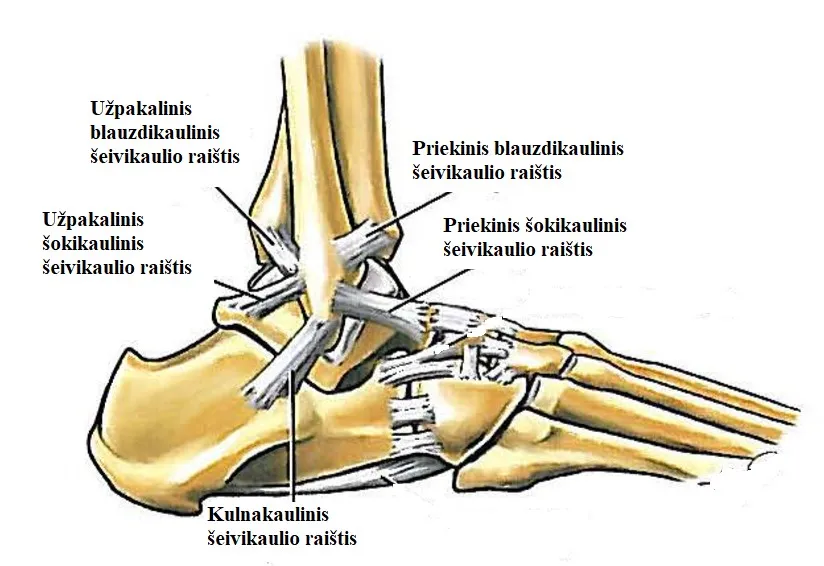 Instability of the ankle jointAnkle instability is joint laxity due to damaged/altered joint structures or inefficient muscle function. Ankle instability due to inefficient muscle work is called functional, while due to...Read
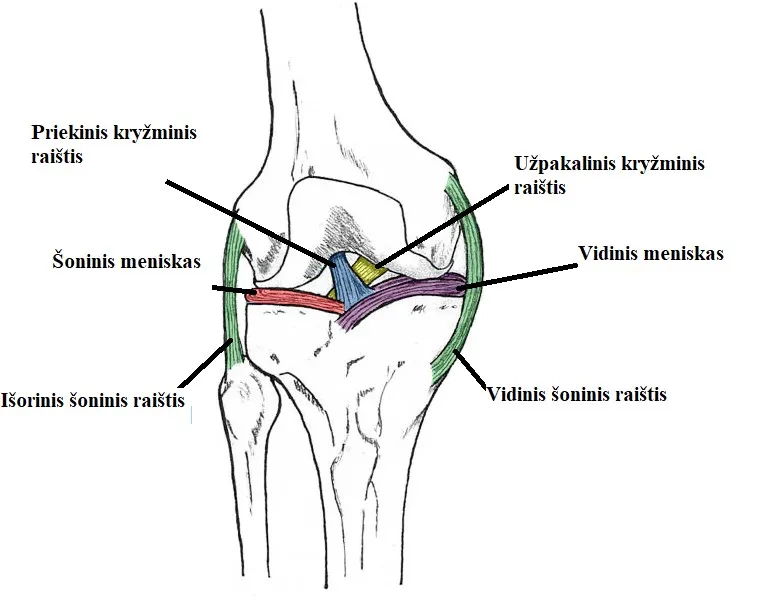 Instability of the knee jointInstability of the knee joint occurs when the ligaments of the joint (lateral or cruciate) are damaged, and is also reduced if the menisci are damaged or removed. Damage to the ligaments of the knee joint can occur...Read