Pain in the joints of the hands
Pain in the joints of the hands affects people of all ages and often has a strong negative impact on the quality of life. Pain in the joints of the hands can limit both the ability to do physical work - lifting heavy objects, carrying...
- Topic
- Joints and tendons
- Reading time
- 15 minutes
Pain in the joints of the hands affects people of all ages and often has a strong negative impact on the quality of life. Pain in the joints of the hands can limit the ability to do physical work, such as lifting heavy objects, carrying bags from the store, doing spot activities, working at the computer or performing precise movements related to fine motor skills, such as knitting or holding tweezers.
Pain in the joints of the hands can be related to the joints of the hands themselves, parts of the body from which the pain can spread to the joints of the hands. This is especially true for the neck, problems with which often cause pain that spreads to the arm. Pain in the joints of the hands can occur at any age, the causes can be different. Pain can be managed with proper assessment of the cause and treatment plan.
Pain in the joints of the hands is a disease in which the cause of the pain is not in the joint or even in the hand.
Pain in the joints of the hands can sometimes be caused by problems other than the problem of the painful joint itself. Therefore, before talking about pain in the joints of the hands, first of all, it is necessary to rule out systemic diseases and other disorders that can cause pain in the hands.
Hand and wrist pain, swelling, and a change in shape are the most common problems affecting people in old age. Rheumatoid arthritis is the most common cause of this problem. And although the pain is felt specifically in the fingers and wrist, the cause of this hand joint is not in the hand at all. Rheumatoid arthritis is a systemic (whole body) inflammatory disease that severely affects the joints. And although in such cases physiotherapy is always recommended and often helps to alleviate the symptoms, first of all you should consult a doctor. a rheumatologist, for drawing up a treatment plan.
Pain in the joints of the hands is also quite often caused by blood circulation problems, including angina pectoris, chest flap syndrome, and deep vein thrombosis. The latter usually causes pain in the legs, but it is mistakenly believed that it cannot also cause pain in the joints of the hands. In the case of thoracic outlet syndrome, blood flow is constricted in the neck or between the collarbone and the first rib. In this case, pain in the joints of the hands usually occurs when the hands are raised (especially for a long time). In the case of angina pectoris, the pain can be felt in the left, and sometimes even in the right arm. If you suspect that the pain may be caused by heart problems, you should immediately visit a doctor.
Infectious diseases such as herpes zoster also cause pain in the joints of the hands. However, in that case, of course, the main signs of infection will also be noticeable - increased temperature, sweating, etc., and in the case of herpes zoster - a skin rash.
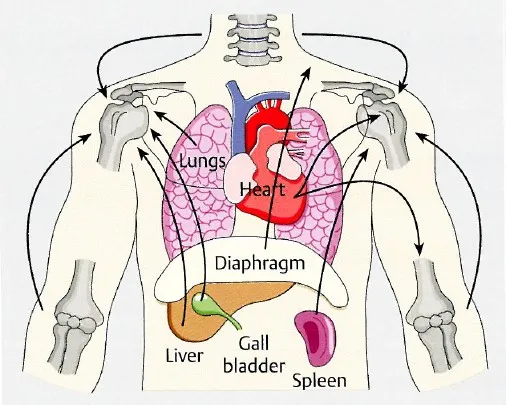
Also, disorders of internal organs can cause pain in the joints of the hand (especially the shoulder). For example, the liver may refer pain to the right shoulder. Spleen - to the left. Lungs - to both shoulders, etc.
When the pain in the joints of the hands is of an unclear nature - it does not depend on movement and load, occurs more at night than during the day, and also if there are concomitant symptoms such as sweating, fever, digestive problems, it is advised to consult a doctor or a physiotherapist without delay. The good news is that this type of problem only accounts for a fairly small percentage of hand joint pain cases.
When it comes to hand joint pain, we can distinguish three main areas - shoulder joint pain, elbow joint pain and wrist/finger joint pain.
Shoulder joint pain
The shoulder joint is the most mobile limb joint in the human body. Such great mobility is determined by the anatomy of the bones that make up the shoulder joint - the upper arm and the scapula. The articular fossa of the scapula is very shallow and small compared to the head of the humerus, which "fits" into the scapular fossa and is round and much larger. For this reason, the bony structures do not provide a significant stabilizing function to the shoulder joint. The stabilization function in the shoulder joint is mainly performed by the muscles, especially the rotator cuff and other soft tissues - the shoulder joint lip and ligaments. These anatomical features allow for high-amplitude movements through the shoulder joint, which are necessary for a person in everyday life. It also allows a person to make quick and sudden movements, such as throwing a ball or a heavy object. However, at the same time, the stabilizing function of the shoulder is highly dependent on muscle function, and if this is insufficient, it usually leads to overloading of passive structures - ligaments, tendons, articular lip or bursa, which are the main sources of pain in the shoulder joint. Thus, the cause of pain in the shoulder joint is usually muscle weakness and the resulting overload of passive structures.
The most common shoulder joint problems - their causes and treatment
The most common sources of pain in the shoulder joint, i.e. pathologies that cause pain are:
rotator cuff pathology (strains, tears, tendinopathies);
shoulder joint instability (traumatic, non-traumatic, congenital);
biceps muscle pathologies (tendinopathy, tenosynovitis);
posterior shoulder stiffness (GIRD);
pathology of the clavicle-shoulder and scapula-sternum joints;
shoulder articular capsule injury;
irritation of nervous origin.
Shoulder stiffness is almost the most common problem. It is a functional problem in which the muscle tendons of the shoulder joint are overloaded and pressed between the scapula shoulder and the humeral head during movement. In the literature, two types of tightness are differentiated - external and internal. External is characterized by irritation of the soft tissues in the subacromial (pomentary) space. Whereas internal is more related to compression of the rotator cuff tendons where the tendons of the cuff contact the head of the humerus (on the inside). Next, tightness is divided according to localization. The causes of shoulder tightness can be various - overload injuries, defective biomechanics of the shoulder joint, changes in the anatomical position of other structures around the shoulder joint (eg, swelling of the subacromial bursa), anatomical shape of the shoulder process of the scapula.
The causes of rotator cuff tendinopathy of the shoulder joint can also be different. This may be directly related to changes in the anatomical structures of the shoulder that irritate the tendons or due to functional reasons such as an overload mechanism. In both cases, the most effective treatment is physical exercises and manual therapy. Corticosteroid injections and physiotherapy procedures do not have a statistically significant effect on faster recovery.
Older people also experience ruptures of rotator cuff tendons and arthrosis of the shoulder joint. In this case, arm weakness and inability to perform various movements appear along with shoulder pain. Treatment depends on the patient's goals, activity level, tear size, pain intensity, and function. Surgical treatment or alternatively conservative treatment with physical rehabilitation may be used.
Instability of the shoulder joint is a condition when the ligaments and muscles of the shoulder joint are unable to hold the head of the humerus in the articular fossa of the scapula. The shoulder feels loose, unstable, there is a fear of dislocation. If the shoulder doesn't pop out, but just feels loose, the instability is probably functional. In this case, the treatment is only conservative - physical exercises and manual therapy.
However, if the shoulder has dislocated, especially if it has happened more than once, the instability is likely to be structural. Structural instability can be divided into three groups - traumatic unidirectional with a Bankart tear, acquired instability due to overload syndrome, and non-traumatic multidirectional instability with bilateral joint laxity. In the case of structural instability of the shoulder joint, treatment with physical exercises is recommended at the beginning, but in case of repeated dislocations, surgical treatment is necessary, because repeated dislocations severely damage the cartilage of the shoulder joint, which may lead to severe progression of arthrosis of the shoulder joint in the future.
Shoulder pain associated with biceps pathology can be due to inflammatory/degenerative processes, instability of the long head tendon, and damage to the anterior articular lip (SLAP). Pain in this case usually occurs in the front part of the shoulder joint, but it can also spread to other parts or to the arm. Treatment depends on the lesion, can be conservative, and occasionally requires surgical intervention.
Less common and specific shoulder joint problems and causes of pain - frozen shoulder (adhesive capsulitis), snapped shoulder blade, internal organ problems
Less common causes of shoulder joint pain are frozen shoulder (conjunctival capsulitis), pathology of the pectoralis major muscle (tendon tendinopathy or rupture), snapping scapula (scapular dyskinesis) syndrome. Also, radiating pain may occur from other places, such as the neck, thoracic spine, the pain may be caused by a tumor or radiating pain from internal organs (diaphragm, liver, gall bladder, heart, spleen, lungs).
Frozen shoulder (frozen shoulder) is a very unpleasant and tiring and often extremely long-lasting problem. The shoulder is very painful and stiff. It is difficult to raise your arm, fasten your car seat belt, reach into your back pocket or fasten your bra. The pain also occurs at night, often even painkillers do not help.
Frozen shoulder usually occurs in middle-aged people - 40-60 years old, statistically it is observed that this problem occurs 3 times more often in women than in men. The reasons can be very diverse - diabetes, thyroid or cardiovascular system problems, chronic inflammatory processes and autoimmune diseases, genetic predisposition. Sometimes frozen shoulder develops after a shoulder injury.
In the case of frozen shoulder, due to disturbed metabolic reactions, a network of small blood vessels spreads throughout the body, which grows into the articular capsule of the shoulder joint. Metabolic changes lead to an increase in the production of collagen, which causes the normally elastic joint capsule to stiffen and contract. This disease has three stages:
- frostbite, when acute pain is felt both day and night;
- stagnation, when the pain is reduced, but they themselves are very frozen.
- after warming up, pain and stiffness decrease, range of motion and control are regained.
In the case of true adhesive capsulitis ("frozen shoulder"), the resolution of the problem, especially without doing anything, can last about 2-3 years, sometimes even longer. Conservative treatment with physical exercises, physical factors - heat/cold, and changing lifestyle factors - general physical activity, bad habits, diet, sleep quality, etc. is mostly applied. Before the problem progresses, steroid injections are often performed under ultrasound guidance, which can be very effective in the very early stages, before the shoulder has frozen. Surgical treatment is usually unnecessary and is only used in very exceptional cases.
The good news is that not all stiff shoulders are "frozen". Quite often, the shoulder is simply stiff due to excessive muscle tone and the symptoms it causes are very similar to adhesive capsulitis. This is called pseudo-frozen shoulder. In such cases, the treatment is much faster and simpler, sometimes solving the problem even within a few weeks.
Scapular dyskinesis is a problem when the scapula moves uncoordinated (irregularly) and thus overloads the shoulder joint. This problem occurs due to functional mechanisms, when the muscles stabilizing the scapula work uncoordinatedly and are not able to optimally stabilize and control the scapula during arm movements. Scapular dyskinesis can also arise from "shortening of the posterior articular capsule. In both cases, treatment is carried out only conservatively - physical exercises, with the aim of correcting the correct biomechanics of the shoulder complex."
Pain associated with irritation of a nerve origin, such as flap chest syndrome or lesions of the long thoracic nerve or axillary nerve, is treated depending on the lesion. In thoracic outlet syndrome, the brachial plexus, which innervates the shoulder joint, is compressed between the clavicle and the first rib. In this case, the treatment is very complex, using manual therapy, soft tissue techniques, muscle activation and neurodynamic exercises. Operative treatment is the last resort when the nerves and blood vessels are pressed very hard and conservative treatment does not give results, but usually it is not necessary and the problem can be solved with the help of conservative treatment.
Shoulder pain caused by internal organs or other serious pathologies is a very rare, but much more dangerous problem. Problems with internal organs, such as liver, bile, can manifest as shoulder joint pain. Also oncological diseases, such as a tumor of the apex of the lung. The pain often has an unknown origin, appears for no reason, is not related to movement and load on the shoulder joint, occurs at night, the problem progresses quickly, weight suddenly starts to fall. If you notice such symptoms, you should contact your family doctor immediately.
Pain in elbow joints
Damage of articular origin can occur between all joints of the elbow area - humerus-ulna, humerus-radius, ulna-radius, depending on the place where the dysfunction occurred. Elbow pain can be caused by both joints and soft tissues.
Lateral elbow pain is the most common elbow joint problem. It can be related to tendon tendinopathy or radiating somatic pain from above - shoulder, neck, even chest area. Pain can also be caused by synovitis or bursitis of the humerus-radial joint, instability of the elbow, or a combination of all problems.
Also, pain in the inner part of the elbow often occurs in throwers. During these sports, the internal collateral ligament is overloaded, and over time, "valgus" instability of the elbow develops. This can later lead to synovitis. In children, it can cause damage to the pineal gland. The medial collateral ligament can also be injured during acute trauma, such as an overuse injury in tennis players, javelin throwers, etc. Treatment usually involves weight reduction and appropriate conservative rehabilitation.
Another cause of elbow joint pain can be irritation/neuritis of the ulnar nerve. The reasons can be various - due to the instability of the nerve, anatomical structural deformations that irritate the nerve, direct trauma of the ulnar nerve. Depending on the cause, treatment is either conservative or surgical.
Pain in the back of the elbow can be associated with bursitis of the ulnar process, which occurs after an acute injury or due to constant irritation of the ulnar process, for example, leaning on a hard surface. Treatment is with corticosteroid injections and rest. If bursitis recurs, removal of the bursa is recommended.
Posterior elbow tightness is almost the most common cause of posterior elbow pain due to excessive and frequent elbow extension motion or arthritis in later life. Treatment combines strategies to reduce extension motion and other conservative methods or arthroscopic correction of the tightness if the problem is recurrent.
Pain in the joints of the small hands - Pain in the joints of the wrist and fingers
The wrist joint is highly mobile and is made up of many different individual joints, each of which can be a source of pain. Wrist pain can be classified into radial and ulnar pain and central pain. Radial pain can be caused by extensor carpi radialis tenosynovitis, De Quervain tenosynovitis (retractor pollicis longus tenosynovitis) and bone fractures. Irritations of nervous origin and radial epiphyseal stress reaction are less common. In the central part, the most common cause of pain is nerve irritation, cysts, tightness syndromes, bone dislocations and Kienbock's disease (avascular necrosis of the lunate bone) are less common. Tenosynovitis of the ulnar extensor muscle develops in the elbow area, fractures of individual bones, instability of the radius-ulnar joint, bone dislocations occur less often.
Depending on the origin of the pain (whether it is an acute injury, damage to the overload mechanism or disease), a radiological or physical examination is performed. Further treatment also depends on the type of damage. Surgical intervention can be performed, often a splint, manual therapy and physical rehabilitation are sufficient. If the source of pain is not in the wrist area, but for example in the shoulder joint or the neck, a detailed examination of the suspected areas is required.
The causes of finger joint pain are usually strains of different finger muscles, tears (Climber, Jersey damage), nerve damage (Skler thumb), ligament damage (AFL thumb), fractures of different phalanges. Joint pain can also be felt due to other diseases. Arthritis is one of the most common causes. Hand joint pain during pregnancy can affect the fingers due to hormonal and metabolic changes in the body.
Finger joint pain is treated depending on the cause. For example, a Climber's injury, which is a fracture where the flexor tendon attaches to the bone, is treated with surgical reconstruction or immobilization. If it is a complication caused by a disease, for example, finger joint deformation due to arthritis or osteomyelitis, it is treated conservatively with physical rehabilitation or medical treatment. If the source of pain is of nerve origin above the painful area, for example, in the wrist, elbow, shoulder area or neck, these problem areas are emphasized and neurodynamic treatment is carried out along the course of the entire nerve.
Are you constantly suffering or have suddenly developed pain in the joints of your hands? We can help you at the physiotherapy clinic. We invite you to register: +370 682 21 414
 Joint pain and pathologiesA joint is a complex connection between two or more bones that helps us perform various movements. Each joint consists of cartilage that covers the ends of the bones and reduces the impact force directed at the joint. At the ends of the bone...Read
 Joint painJoint pain is one of the most common problems of the musculoskeletal system. The human body has many joints of different sizes that connect bony structures, help with movement and withstand large loads...Read
 Knee joint painPain in the leg joints (pain in the hip joints, foot joints, knee joints) is a common phenomenon that is faced by more and more people, it is experienced by young, middle-aged and elderly people alike. This happens...Read
 Instability of the ankle jointAnkle instability is joint laxity due to damaged/altered joint structures or inefficient muscle function. Ankle instability due to inefficient muscle work is called functional, while due to...Read
 Instability of the shoulder jointShoulder joint instability is much more common than other limb joint instability. This can largely be explained by the anatomical peculiarities of the shoulder joint. The shoulder, due to its structure, can easily be...Read
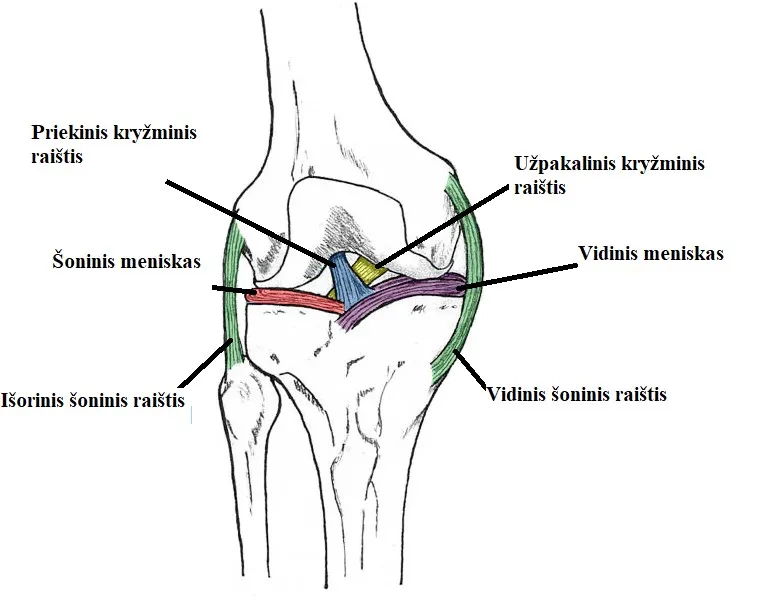 Instability of the knee jointInstability of the knee joint occurs when the ligaments of the joint (lateral or cruciate) are damaged, and is also reduced if the menisci are damaged or removed. Damage to the ligaments of the knee joint can occur...Read