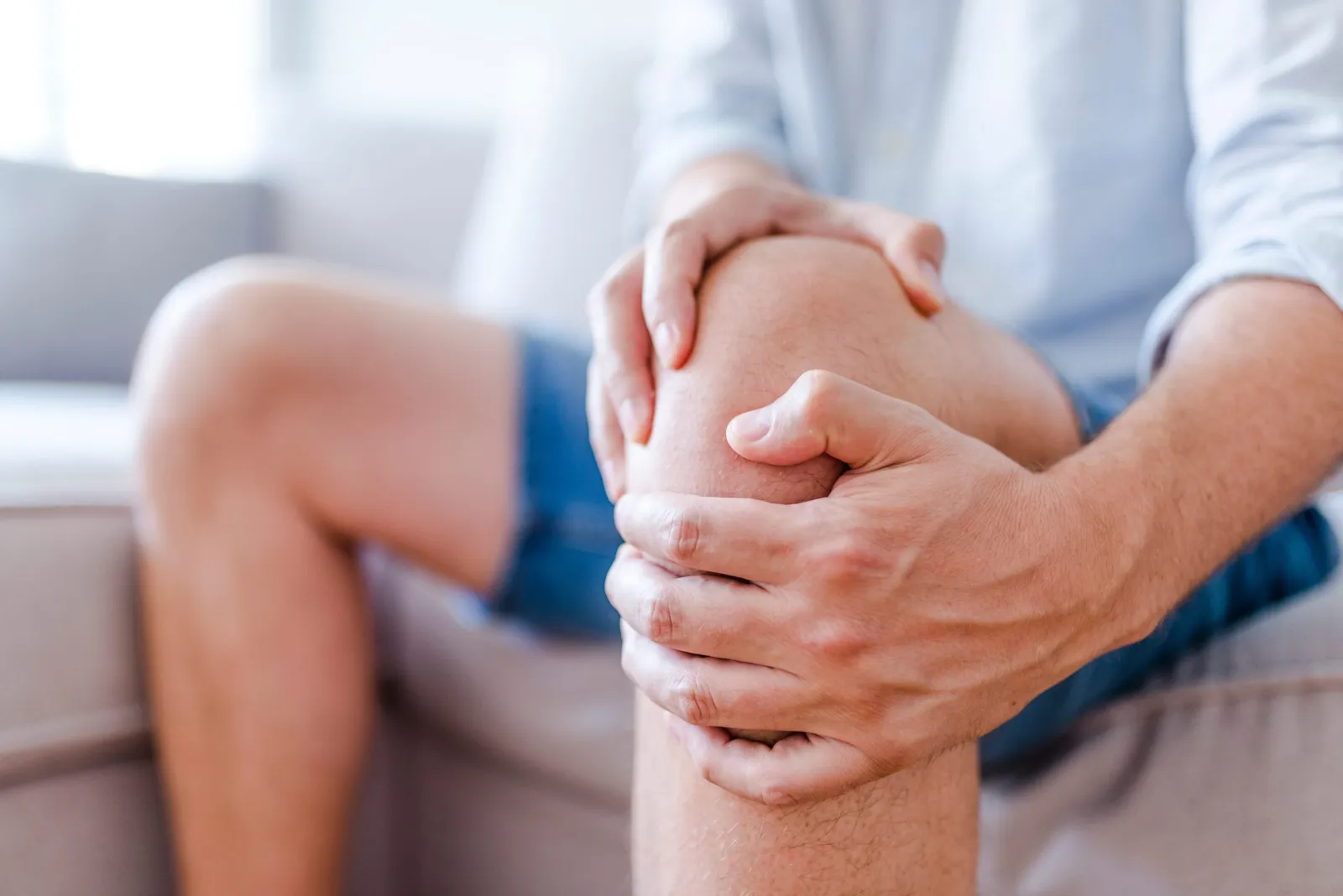
Knee joint pain
Pain in the leg joints (pain in the hip joints, foot joints, knee joints) is a common phenomenon that is faced by more and more people, it is experienced by young, middle-aged and elderly people alike. This happens...
- Topic
- Joints and tendons
- Reading time
- 7 min
Pain in knee joints is a problem that has its own solution and quite often that solution is very simple
Pain in the leg joints (pain in the hip joints, foot joints, knee joints) is a common phenomenon that is faced by more and more people, it is experienced by young, middle-aged and elderly people alike. This happens to both active and passive lifestyle advocates. Be that as it may, pain in the joints of the legs prevents you from enjoying movement or simply getting from point A to point B (whether at home or outside), and is often felt at rest. When joints hurt, it naturally has a negative impact on people's quality of life. As a result of pain, the desire to travel and exercise disappears, it becomes difficult or even impossible to work, pain or the problems arising from it often have a negative effect on our mood, which can have a negative impact on our social life. However, this problem has a solution.
Pain in the knee joints - the problem may not be in the knee at all
Knee joint pain, like other pains, is usually interpreted as an alarm signal sent by our nervous system, so that we do not do more damage to our body. These "alerts" cause us to find a different movement pattern/strategy after an injury: e.g. after spraining the ankle, we begin to limp, thereby reducing the load on the damaged area (but increasing the load on compensating areas). In other words, we sprained the ankle, and due to the newly formed pattern of inappropriate movement that protects the sprained ankle, after some time knee pain occurs. However, pain often occurs without a clear cause, injury and without signs of inflammation (swelling, local temperature rise, stagnation after rest, etc.). In this case, we are still looking for a different movement pattern, even though there is no damage to the joints. Then this "protective" function becomes harmful (due to the increased load on compensating areas, there is a high probability that sooner or later they will not withstand the load placed on them, will be damaged and will become a source of pain themselves). Also, with delay, joint pain can become chronic, which is much more complex - the solutions are more complex and take longer (but they exist). Therefore, ignoring the pain in this case is not a good option.
Hip, foot and knee joint pain and functional correlates
Hip joint pain, foot joint pain and knee joint pain are often interconnected, as these regions functionally directly influence each other - the mobility and position of the foot in a static and dynamic position together with the stabilization function of the hip determines the distribution of loads on the knee joint, due to these particularly close connections, they can be treated as one body region. It is possible that the pain is felt in the knee joint, but in order to reduce or eliminate it, you need to improve the function of the hip or ankle. Also, the function of the lower limbs is greatly influenced by the function of the trunk muscles. Because of direct functional connections and, of course, because of spinal control. As we know, the nerve roots from the spinal cord at the lumbar spine travel down to the toes like electrical wires. Both motor and sensory signals travel through them, thanks to which we can move our legs, feel what position they are in, and also feel if there is any irritation (we got caught, stuck, etc.). Therefore, a general evaluation of the movement function is necessary in order to determine the source of the pain, the causes of its occurrence as accurately as possible, and to find an appropriate treatment method so that the pain in the knee joint disappears and does not recur.
Causes of knee pain
There are several main reasons for knee joint pain, various major or minor structural damage or clinical syndromes:
Lack of movement - when there is not enough movement to maintain a healthy metabolism in the joint, around it and in the muscles surrounding the knee joint.
Too much load - when there is too frequent load and too short or ineffective rest, so that the metabolism in the joint has time to recover and, just as importantly, the nervous system can rest. It can also be a one-time excessive load for which the tissues are not ready to withstand. In both cases, a structural failure may occur. It is also an inefficient movement when, due to compensatory movements, the load is mostly concentrated in one place.
Overweight, systemic diseases such as rheumatoid arthritis, etc., genetic factors.
Degenerative or traumatic changes in the cartilage, menisci, ligaments, tendons and increased tissue sensitivity around the knee joint can occur due to the above reasons.
Ways to solve knee joint pain
The most common causes of knee joint pain in our physiotherapists' patients are passivity or excessive load. In this case, we can reduce most of the risk by starting to move more, dosing the load, improving the quality of movement, paying more attention to more effective rest, nutrition - by changing the lifestyle.
If we suspect that the pain in the knee joint is caused by a lack of movement, of course we need to start moving more. It is especially important to do this gradually, also taking into account how the symptoms change during and after exercise. At the same time, it is recommended to develop efficient movement habits, using exercises as tools to achieve this.
When knee joint pain occurs in a physically active person, it is necessary to evaluate the loads experienced by him, the recovery after them (sleep, diet, stress) and the quality of the movement. The latter is especially relevant if other factors do not raise suspicions. Because inefficient movement results in an increased load on certain areas, which increases the risk of an overuse injury.
There are many strategies for treating and preventing overuse injuries, as well as causes. All the listed reasons are usually more or less responsible for the occurrence of knee joint pain. Therefore, for the most effective treatment, actions must be complex and team-based. From a physiotherapist's perspective, there can be various strategies for dealing with joint pain, but basically two can be distinguished:
Adjustment of movement efficiency and quality;
Adaptation of the body (nervous system, cardiovascular system and other structures) to increasing load.
Which of them will dominate depends on each individual case, but usually, sooner or later, they intertwine. The ultimate goal: to restore or improve, in this case, the function of the knee joint.
Information for patients with knee joint pain
In both cases, we use certain exercises and educate the patient. Exercise seems like a normal practice for a physical therapist to many patients, but education is an equally important part. Patients often come to the physiotherapist with a diagnosis such as: meniscus tear, lateral collateral ligament, internal collateral ligament, anterior cruciate ligament strain - partial tear, grade I-IV chondromalacia, iliac tibial band (ITB) syndrome, inflammation of the patellar ligament, bursitis, arthrosis of the knee joint, etc. Hearing that coming from a doctor's mouth sounds terrifying. As a result, the primary task is to share with the patient what are the possible reasons for the diagnosed changes or syndromes, how some of them can be "cured", and some can be lived with a full life, and that our task is to return the joints to their normal function. Also, due to the functional dependence on other body regions, exercises will not be limited to the knee joint. Patients often wonder why exercises that are not related to the knee joint are performed. It is important to educate the patient as to how dysfunction of one or another area affects the function of the knee joint, so that it is clear to the patient why, at first glance, exercises unrelated to the knee joint constitute a significant part of his exercise program. Of course, part of the education is focused on how the patient should or should not behave in the acute period, how it is recommended to change certain habits in the long term.
So, if you experience pain in several joints or other places, or if you hear a scary-sounding diagnosis, you should not give up, because in most cases there are ways and tools to help yourself reduce pain and improve your quality of life.
Excruciating or regularly recurring knee joint pain? We can help you at the physiotherapy clinic. Register: +370 682 21 414
 Joint pain and pathologiesA joint is a complex connection between two or more bones that helps us perform various movements. Each joint consists of cartilage that covers the ends of the bones and reduces the impact force directed at the joint. At the ends of the bone...Read
 Joint painJoint pain is one of the most common problems of the musculoskeletal system. The human body has many joints of different sizes that connect bony structures, help with movement and withstand large loads...Read
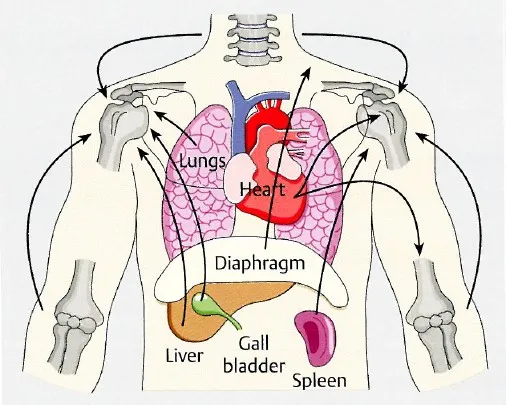 Pain in the joints of the handsPain in the joints of the hands affects people of all ages and often has a strong negative impact on the quality of life. Pain in the joints of the hands can limit both the ability to do physical work - lifting heavy objects, carrying...Read
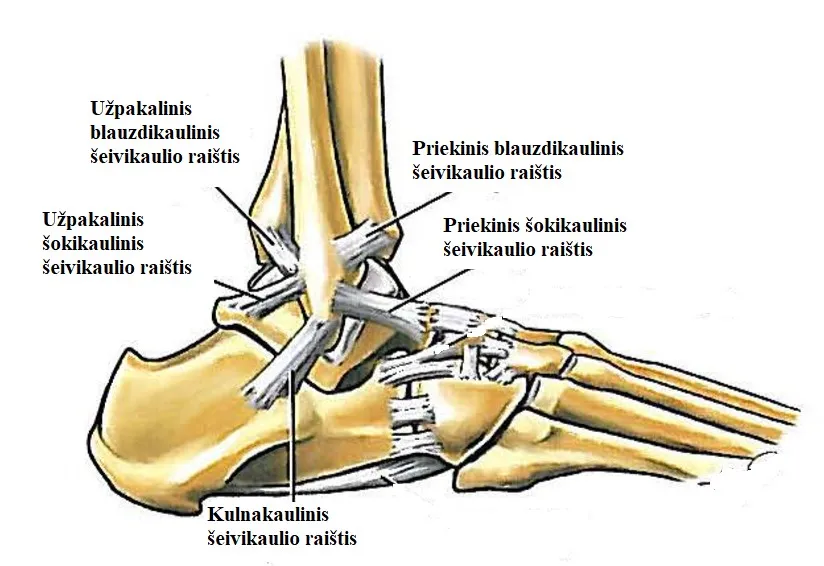 Instability of the ankle jointAnkle instability is joint laxity due to damaged/altered joint structures or inefficient muscle function. Ankle instability due to inefficient muscle work is called functional, while due to...Read
 Instability of the shoulder jointShoulder joint instability is much more common than other limb joint instability. This can largely be explained by the anatomical peculiarities of the shoulder joint. The shoulder, due to its structure, can easily be...Read
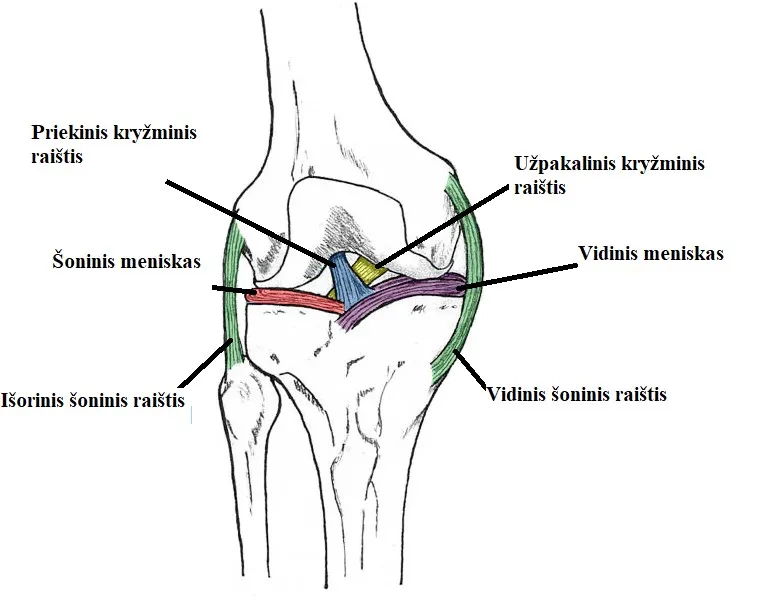 Instability of the knee jointInstability of the knee joint occurs when the ligaments of the joint (lateral or cruciate) are damaged, and is also reduced if the menisci are damaged or removed. Damage to the ligaments of the knee joint can occur...Read