
Wrist joint instability
Wrist instability is joint laxity and altered motion of the wrist bones. It usually occurs during a traumatic event, when ligaments and bone structures are damaged. Instability is less common...
- Topic
- Joints and tendons
- Reading time
- 5 minutes
Causes and symptoms of wrist instability
Wrist instability is joint laxity and altered motion of the wrist bones. It usually occurs during a traumatic event, when ligaments and bone structures are damaged. Less often, instability occurs due to overload or comorbidity. Wrist injuries are quite common, but they certainly do not always cause wrist instability. After injuries, instability occurs in only 10% of cases.
Wrist instability itself can be felt at rest (static) and during movement (dynamic). Static instability usually occurs after acute trauma and is detected by radiographic studies. Dynamic instability can be detected by performing radiological examinations and specific movements (tests) of the wrist joint with the aim of provoking pain or increased displacement of the bones.
Fig. 1. Wrist pain. Source: https://www.beaumont.org/health-wellness/blogs/hand-and-wrist-pain-what-causes-it-what-can-you-do-about-it .
Common symptoms of wrist instability and anatomy of the wrist joint
The most common symptoms of wrist joint:
- Swelling (after injury);
- Pain at rest or during movement and load;
- A sense of instability in the wrist when making movements or resting on the affected arm, clicking/clicking.
The wrist joint consists of eight bones (carpal bones) which are arranged in two rows, the ulna and the radius, the ligaments connecting them and the articular capsule. It is this structure that is basically responsible for the stabilization of the joint.
Fig. 2. Wrist bones from the palmar side (left hand). Source: https://www.mayoclinic.org/carpal-bones/img-20007898 (edited by: Kineziterapijos Klinika).
The most common types of wrist instability and their treatment
First of all, in order to find out which parts of the wrist joint are damaged, it is necessary to perform a thorough interview and physical examination of the patient. During the survey, it is important to find out if there was an injury and exactly how it happened. For example, if you fall on your outstretched arm, you can immediately suspect the instability of the navicular-lunar joint. Meanwhile, falling on the palm/thumb pad - navicular fracture. Then a physical examination is performed, during which pain to touch and pressure is assessed, the wrist joint is examined, swelling, joint deformities, etc. are assessed. Movement tests are also done to find out which movements are causing the symptoms and which are limited. In certain cases, radiological - X-ray, ultrasound examinations are also performed.
Instability occurring between carpal bones of the same row (dissociative carpal instability):
1. Instability between the navicular and lunate (instability of the navicular-lunar joint).
An injury to the navicular joint is one of the most common sports injuries of the wrist. The injury occurs when falling on an outstretched arm. Ligaments can tear (interosseous lunate ligament, dorsal lunate ligament, metacarpal radial lunate ligament). If a partial ligament tear occurs or only one of the 3 ligaments is torn, the problem is treated conservatively. In case of complete rupture of two ligaments, surgical treatment (ligament reconstruction) is required.
Fig. 3. The position of the wrist during the injury. R. Good. Sports injuries: diagnosis, treatment, rehabilitation and prevention.
2. Instability between the moon and the triangle (lunar triangle joint instability).
The cause of instability of the triangular joint of the moon is usually a fall on an outstretched arm. The injury can also occur when lifting very heavy weights overhead (keel deadlifts). Symptoms are mild or do not appear immediately. Pain and a feeling of instability are provoked only when the palm is strongly bent. There may be a decrease in strength in the palm or clicking during movements. This instability of the wrist is treated conservatively, but in the case of a complete rupture of the ligaments, surgical treatment is performed.
Fig. 4. Gira lifting. https://www.bodybuilding.com/content/the-6-best-kettlebell-exercises-you-need-to-do.html .
3. Fracture of the navicular bone.
Fractures of the navicular may result in general instability of all carpal bones. Treatment is available conservatively and surgically depending on the lesion. Deformation of the wrist joint may develop without treatment.
5. Fig. Fracture of the navicular bone. https://sites.google.com/site/activecarephysiotherapyclinic/scaphoid-injury (edited by: Kineziterapijos Klinika).
Less common types of wrist instability and their treatment
- Instability occurring between the ulna, radius and carpal bones of the first row, or between two carpal rows (non-dissociative wrist instability). It is usually associated with joint hypermobility and is treated with conservative methods. However, it can also be of traumatic origin.
- Instability between the deltoid and humerus (instability of the deltoid joint).
This is the most common injury to the ulnar part of the wrist (inner part of the wrist). A click is heard during the movement, pain is felt when touching. The diagnosis is carried out radiologically, but X-ray is not used for this.
- Instability resulting from reduced range of motion elsewhere (for example, after a radius fracture, wrist instability results from a compensatory increase in wrist mobility). Also called adaptive wrist instability. In this case, the problem is treated conservatively.
- Instability between different rows of bones, radius and ulna (complex wrist instability). It occurs both in general hypermobility and in cases of serious injuries (bone fractures with ligament sprains). Treatment requires surgical intervention.
It is worth noting that without treatment of wrist joint instability problems and joint damage, other changes may occur over time - arthrosis, joint deformation, chronic pain (related to general hypersensitivity) and changes in the quality of movement, which may affect other joints of the upper limb (elbow, shoulder joint).
Fig. 6. Hypermobility of joints. Source: https://alexandertechnique.co.uk/benefits/alexander-technique-and-hypermobility .
Suffering from joint pain in the wrist? Feeling loose in your wrist? Wrist swelling and limited movement?
We work with wrist problems all the time. We can help you.
Register: +370 682 21 414
SOURCES
- Mr. Bruckner. Clinical Sports Medicine. North Ryde: McGraw-Hill Education Australia, 2012. ISBN: 9780070998131.
- Gud. Sports injuries: diagnosis, treatment, rehabilitation and prevention. Kaunas: UAB "INDIGO print", 2015. ISBN: 978-609-8078-38-1.
- Chin, H. (2015). Carpal ligament injuries, pathomechanics, and classification. US National Library of Medicine.
- L., R., Ranzenberger; K., R., Carter. (2019). Lunotriquetral Instability. Build Pearls.
- Treiman, M., Strle, N., Matthews, C., Borstel, D. (2019). Carpal Instability: Clarification of the Most Common Etiologies and Imaging Findings. Journal of the American Osteopathic College of Radiology.
- B., T., Carlsen, A., Y., Shin. (2008). Wrist instability. Scandinavian Journal of Surgery.
- Muminagic, S., Kapidzic, T. (2012). Wrist Instability After Injury. US National Library of Medicine.
 Joint pain and pathologiesA joint is a complex connection between two or more bones that helps us perform various movements. Each joint consists of cartilage that covers the ends of the bones and reduces the impact force directed at the joint. At the ends of the bone...Read
 Joint painJoint pain is one of the most common problems of the musculoskeletal system. The human body has many joints of different sizes that connect bony structures, help with movement and withstand large loads...Read
 Knee joint painPain in the leg joints (pain in the hip joints, foot joints, knee joints) is a common phenomenon that is faced by more and more people, it is experienced by young, middle-aged and elderly people alike. This happens...Read
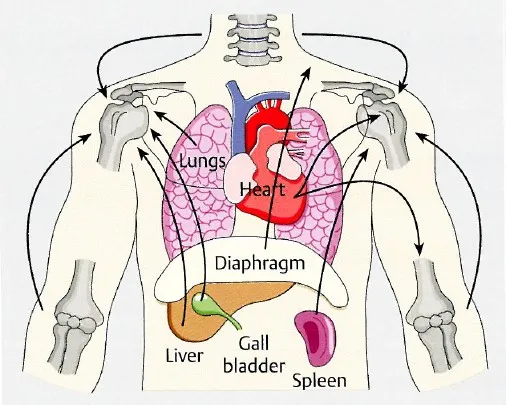 Pain in the joints of the handsPain in the joints of the hands affects people of all ages and often has a strong negative impact on the quality of life. Pain in the joints of the hands can limit both the ability to do physical work - lifting heavy objects, carrying...Read
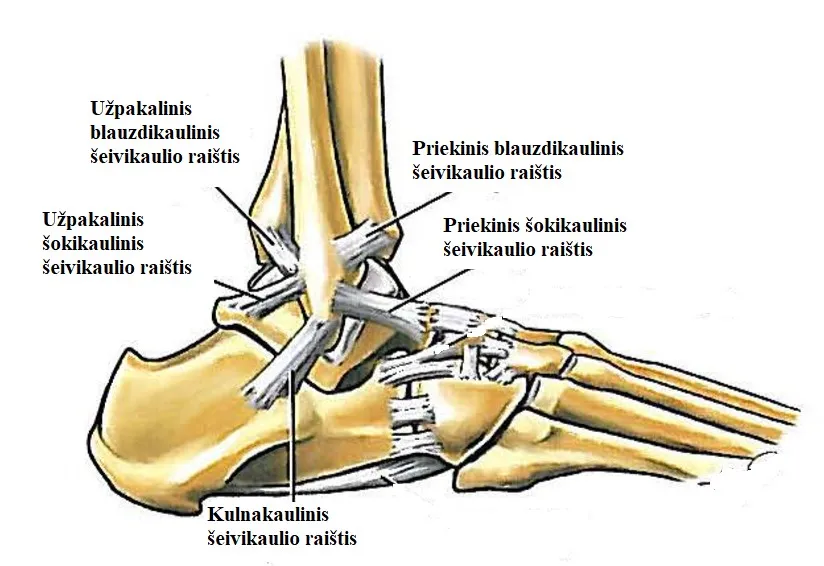 Instability of the ankle jointAnkle instability is joint laxity due to damaged/altered joint structures or inefficient muscle function. Ankle instability due to inefficient muscle work is called functional, while due to...Read
 Instability of the shoulder jointShoulder joint instability is much more common than other limb joint instability. This can largely be explained by the anatomical peculiarities of the shoulder joint. The shoulder, due to its structure, can easily be...Read