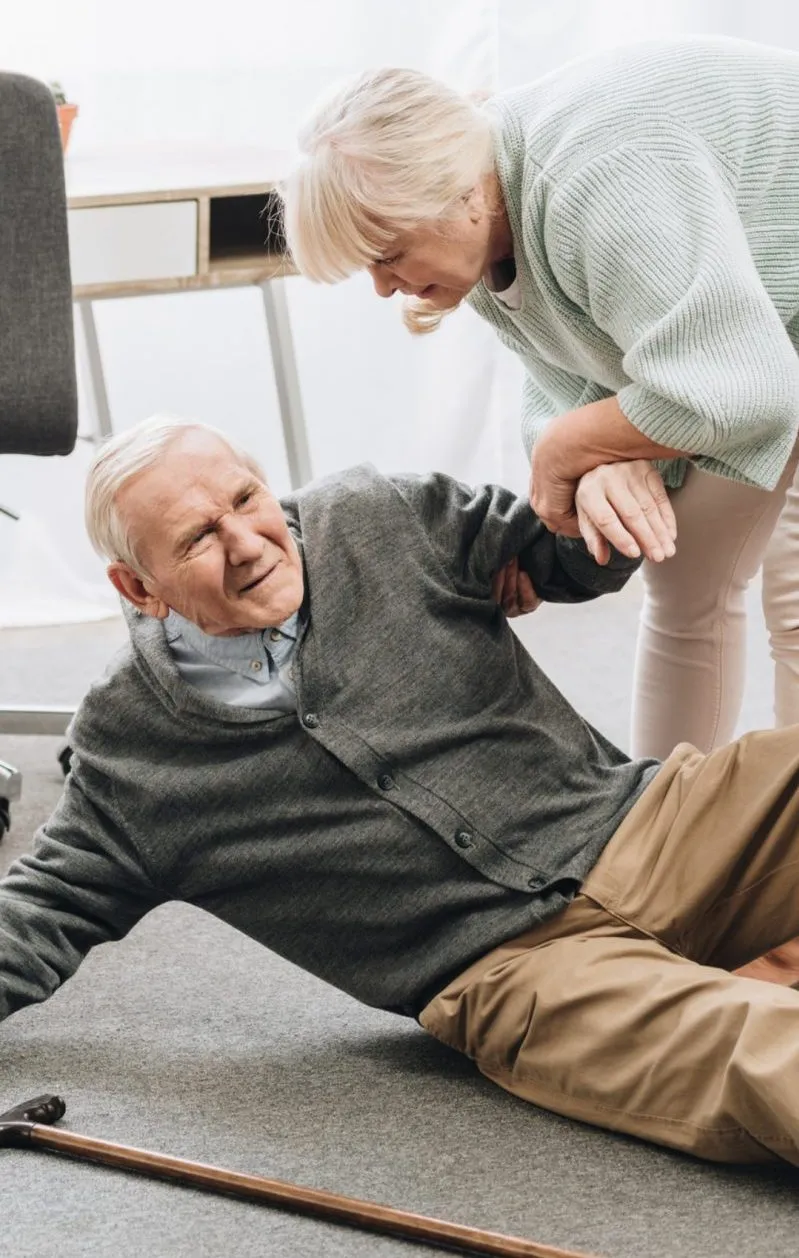
Fall prevention
According to the WHO, falls are one of the major public health problems worldwide. As many as 37.3 million people worldwide fall each year and are injured badly enough to require...
- Topic
- Injuries and rehabilitation
- Reading time
- 6 minutes
According to the WHO, falls are one of the main public health problems worldwide. As many as 37.3 million people around the world fall each year and are injured badly enough to need medical help. The scale of the problem matters: fall injuries cause more years lived with disability than drowning, burns and poisoning combined. An estimated 684,000 fatal falls happen every year, making falls the second most common cause of accidental death after road traffic injuries. In all regions of the world, mortality is highest among adults over 60.
Risk factors for falls
Falls usually result from a complex interaction of different risk factors. The WHO groups them into four categories: biological, behavioural, social/economic and environmental.
Biologiniai rizikos veiksniai
Biological factors include characteristics of the human body, such as:
- Age,
- Lytis,
- Physical capacity,
- Cognitive capacity,
- Emocinis stabilumas,
- Ligos.
Over the years, various ageing processes begin in the body and the risk of psychological and physical health conditions grows. Lack of motivation to move can limit participation in physical activities, so less attention is paid to developing physical qualities. The risk of falling is increased especially by the interaction of biological factors with behavioural and environmental ones. For example, loss of muscle strength reduces function and causes weakness, which increases the risk of falling in an unsafe environment.
Sex also affects the risk of falling: older women are more prone to falls. One reason is that women lose muscle mass faster than men. Muscle loss is also accelerated because women take part less in physical activities that use muscle strength.
Elgesio rizikos veiksniai
Behavioural risk factors include a person's actions, emotions and daily choices, which can be changed easily. For example, risky behaviour such as drinking too much alcohol, taking more medication, or a mostly sitting or lying lifestyle can be changed with targeted interventions.
Behaviour is also affected by fear of falling, which is especially common among older people. The fear appears when there is a risk of falling again and getting hurt, and when a person knows it will be very hard to get up after a fall. This fear can have both positive and negative effects. The positive effect: seniors are more motivated to take precautions, and over time their gait adapts to improve stability. For others the fear can be negative: they may become more passive in activities that need self-confidence, strength and balance.
Socialiniai/ekonominiai rizikos veiksniai
Social conditions and economic status are significant risk factors, specifically: low income, unsuitable housing, lack of social contact and limited access to health and social care, especially in remote areas.
Aplinkos rizikos veiksniai
The main environmental risk factors connect a person's physical condition with their surroundings (hazards can occur both at home and in public places). At home, hazards include narrow stairs, slippery floors or stairs, low furniture, clutter, pets and poor lighting. In public places, the risk of injury is increased by uneven and slippery surfaces, narrow passages, poor lighting, unsuitable clothing (too long or restrictive) and footwear not suited to safe walking.
Environmental risk is especially high in the cold season, when streets are covered with ice. In winter the chance of falling rises significantly, especially when risk factors interact. Slipping on ice often ends with bruises, fractures or knocked-out teeth. So how can such accidents be prevented?
Preventing slips
The main measures to avoid slipping on ice relate to biological and environmental risk factors. The combination of these two categories especially increases the risk of falling.
- Apranga,
Clothing should not restrict movement, and should be comfortable and not too long.
- Footwear,
The soles of your shoes should be textured to give better grip on the surface.
- A proper assessment of the surroundings,
Assess the conditions: how even and slippery the surface is and whether there is something to hold on to. Then choose a safe way and speed of walking.
- Training your physical abilities.
Falls are most often caused by poor balance. If it is hard to keep your balance while walking, use walking aids for safety and train your balance consistently. Some people do not notice a lack of balance in daily life and feel steady on the ground, but on a slippery surface reactive balance plays the main role.
Reactive balance (the body's automatic response to an unexpected loss of balance)
Reactive balance is the ability to respond automatically to a change in body position or an external disturbance of balance.
Reaktyvios pusiausvyros pagrindiniai komponentai:
- Internal and external disturbances.
Internal and external disturbances can make it harder to keep reactive balance.
Internal disturbances include poor coordination, a poor sense of the body's centre of mass and a lack of motor control. They can be removed gradually through training, which lowers the risk of falls.
External disturbances come from a force that shifts the body's centre of mass, so stability is lost. They are easy to recognise in daily life: slipping on a slippery surface, standing on a bus that starts or stops, and other everyday situations where stability is suddenly lost and you need to keep your balance.
- Trunk control.
Several body systems are involved in trunk control: the somatosensory, vestibular, visual, nervous and musculoskeletal systems. The point of trunk control is to keep balance in any situation. Good trunk control means a person can keep their balance in both static activities (sitting, standing, kneeling) and dynamic ones (walking, running, crawling) by contracting the muscles important for posture. This control is especially important because it gives a stable base for the arms and legs to move smoothly.
- Balance control.
This is the body's ability to keep its centre of mass within its base of support. A fall happens when a person's centre of mass falls outside the base of support and they have no reactive strategy to keep their balance when conditions suddenly change. Biomechanically, a fall can also be described as a compromised centre of mass: it is no longer in a stable position relative to the base of support.
Reaktyvios pusiausvyros treniravimas
Because several body systems are involved in reactive balance, training it is especially complex. It first needs a detailed assessment to find out which components need more attention and which need maintenance. Good movement quality requires training muscle strength, endurance and flexibility. A training programme should emphasise:
- The activity must be intense enough that the person reacts and tries to avoid falling.
- The activity must include internal/external disturbances.
- The activity must become gradually harder.
- The activity must be repeated again and again until the patient can react appropriately.
Designing and doing a specific reactive balance training can be difficult and unsafe, especially when external disturbances are needed. Anyone who wants to train their balance and reduce the risk of falls needs supervision to avoid injury. That is why we recommend visiting Kineziterapijos Klinika. Our qualified team has many years of experience with a wide range of patients, and our specialists give everyone individual attention. At the initial consultation, the physiotherapist will assess your physical condition in detail and create an individual physiotherapy programme based on your personal needs and goals. As progress is monitored, the programme can be adjusted to reach your goals more effectively.
You can book an initial physiotherapist consultation:
- Telefono numeriu +370 682 21414;
- by email at info@kineziterapijosklinika.com;
- by private message to Kineziterapijos Klinika on Facebook or Instagram.
 Treatment of injuriesWhen performing a certain physical action, sudden, severe pain in a specific place, which can later bother you repeatedly during sports training, games and even rest, swelling, inability to move the body...Read
 Rehabilitation after injuriesRehabilitation after injuries is one of the most important stages of treatment, which depends on the patient's ability to work, recovery of independence after various injuries. Research shows that the right physical therapy chosen after an injury can have...Read
 Rehabilitation after surgeryRehabilitation after surgery helps to recover faster, get rid of pain and regain freedom of movement - to restore impaired functions, so that the patient can return to normal daily life, sports...Read
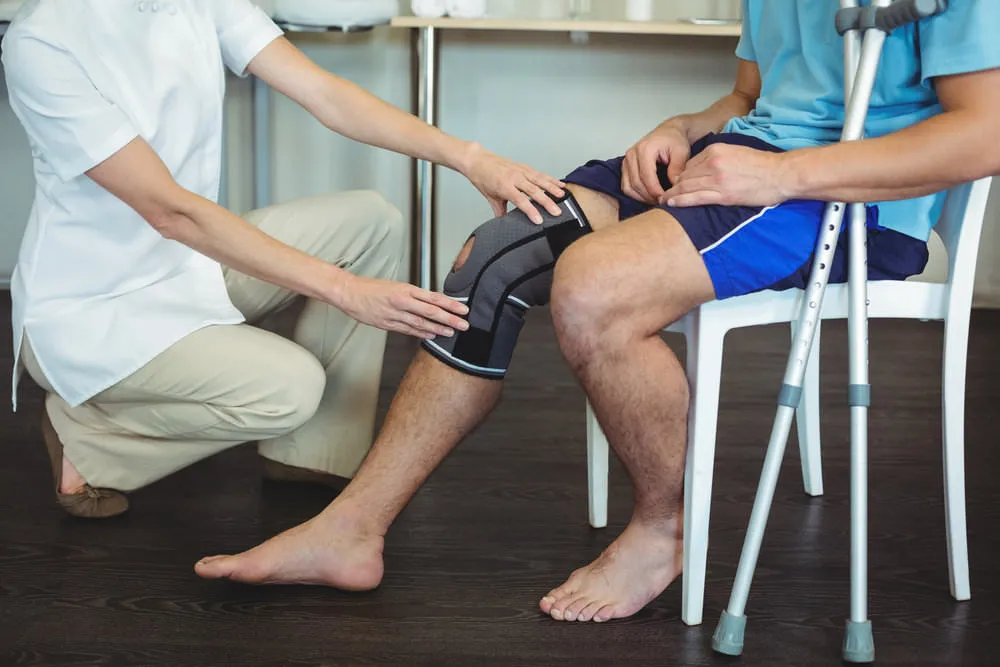 Rehabilitation after chemotherapy and oncological operationsWeakness, lack of strength, muscle and joint pains, decreased physical endurance, unstable gait, balance and coordination disorders, decreased appetite are common symptoms accompanying oncological operations...Read