
Eye exercises
Individual eye exercises for children, reducing eye strain and fatigue.
- Price
- from 30 €
- Duration
- 45 minutes
- Opening hours
- Mon-Fri 08:00-20:00
Prices
| Service | Duration / quantity | Price |
|---|---|---|
| Individual eye exercise for children | 45 minutes | 30 € |
The importance of eye exercise
Many people are probably familiar with the feeling of eye strain and fatigue after a long day at work. However, constant eye fatigue can signal somewhat more serious problems. Eye exercises can prevent the development of eye disorders and help treat eye symptoms. Eye exercises strengthen the muscles that move the eyes, allowing the eyes to relax more and thus reduce existing tension. Performing exercises not only reduces existing eye tension and fatigue, but also improves vision, concentration on the task at hand, reduces eye dryness and the risk of eye diseases. Therefore, eye exercise is not only a great way to alleviate the symptoms of eye disorders, but it is also a preventive measure that can be used to prevent the development of eye disorders, including deterioration of vision due to too long computer use and other factors that overload and exhaust the eyes.
Why should you do eye exercises?
It's no secret that the time spent on digital devices has increased drastically against the background of the pandemic. Most probably recognize the longer hours spent in front of computer, TV or phone screens. The longer time spent in front of the screen during quarantine is also confirmed by scientific research: it was found that eye strain increased by as much as 78% during quarantine [1]. It is important to mention that eye strain provokes eye fatigue, headaches, loss of concentration and other significant factors affecting the quality of life.
It has also been observed that different motor properties of the eye can be a step in the development and progression of myopia. These motor characteristics are, for example, a decrease in the tone of the eye muscles, the ability of the eyes to clearly see variously distant objects. In the process of ensuring a good quality of life, prevention plays a key role - regular breaks, reducing the time spent in front of the screen and, of course, eye exercises.
Eye exercises can help reduce eye strain and fatigue, symptoms of specific eye conditions, and general well-being.
Eye conditions and disorders
Eye strain and fatigue
Eye strain is caused not only by a longer period of time spent in front of digital devices, but also by other factors. These factors are such as:
- Activities that require long-term intense concentration.
- Bright light.
- Eye effort to see objects in twilight.
- The need for glasses as myopia/farsightedness develops.
- Poor accommodation (it is difficult for the eye muscles to focus on a close object).
Depending on the specifics of each person's lifestyle, free time and work, the load on the eyes is proportional. However, due to the aforementioned factors, it is impossible to avoid eye strain in one way or another in the modern world.
The main symptoms that signal increased eye strain are: eye pain, eye fatigue, blurred or blurred vision, headache, increased sensitivity to light, and burning, dry, or watery eyes.
When protecting your eyes from strain, you should first assess the ergonomics of the environment. While sitting at the computer, pay attention to the ambient lighting, the brightness of the screens of the devices used, and the distance from the eyes. It is advisable to blink frequently during work. Blinking naturally refreshes the eyes, helps to relax, calm the eyes and protect against the effects of digital devices.
In addition to the ergonomics of the environment and training the habit of frequent blinking, it is highly recommended to perform eye exercises. Scientific studies confirm that eye exercises reduce the symptoms of eye fatigue by increasing muscle activity. Regular exercise can be considered a therapeutic and non-pharmacological intervention to reduce eye fatigue and associated symptoms of asthenopia.
Nystagmus
Nystagmus - involuntary, repetitive eye movements. Involuntary, repetitive eye movements have a negative impact on vision and depth perception [2]. This condition can be inherited or acquired and affects people of all ages.
Nystagmus can be classified according to the duration of the eye movements. Sometimes the movements in both directions are of equal duration (sudden movement to one side and back). However, nystagmus usually consists of two phases (a sudden movement of the eyeball to one side and a slow movement back).
Nystagmus can be treated by applying exercises to the eyes and using the principles of neural feedback (training the brain). When these two components work synergistically, the neural feedback enhances the effectiveness of the exercises and results in a greater positive effect for the patient.
"Lazy eye" (amblyopia) and squint (strabismus)
Both lazy eye and strabismus are closely related conditions [3]. In both of these conditions, one eye is passive, but in the "lazy eye" disorder, there is no visible strabismus. Meanwhile, during the strabismus condition, it is clearly visible how the eyes cross. These visual disturbances are most common in children.
During these visual disturbances, the brain does not receive feedback from the eye and the term "lazy eye" is somewhat of a misnomer. In fact, since the brain does not receive information from the eye, the information cannot be sent back to the visual organ. As a result, the brain does not use one of the eyes, which is called the "lazy eye". While one eye is passive and relaxed, the other eye needs to perform its own and "lazy eye" function.
Over the past 50 years, studies of developmental plasticity in the brain's visual cortex have led to a better understanding of the initial causes and then the underlying cellular mechanisms of the lazy eye. Although it is widely believed that lazy eye cannot be successfully treated after age 7, recent animal studies have shown that plasticity in the visual cortex can be restored or enhanced later, opening the way to new strategies for treating lazy eye. Furthermore, animal and human studies have shown that these disorders are not simply deficits in one eye, so non-invasive methods make both eyes cooperate. Meanwhile, when applying other procedures, the healthy eye has to compensate the function of the "lazy eye".
Double vision (diplopia)
This is a condition where two images are seen when looking at one object. Double vision can occur in both eyes (binocular) or in one eye (monocular). The type of diplopia can be determined by covering one eye. During the binocular type, covering either eye will eliminate the double vision. And during the monocular type, double vision remains after covering one eye.
There are many factors that can cause double vision. These factors differ depending on the type of diplopia. The more common type is binocular. It occurs when the eye muscles do not perform their function or the innervation of the eye muscles is disturbed. Less commonly, double vision can be caused by problems with the brain. The monocular type can occur due to other existing eye disorders: astigmatism, cataracts, dry eye syndrome.
Treatment may vary depending on the type of double vision, the underlying cause, and the recurrence of double vision. For example, during the binocular type, treatment begins with the correction of diplopia with prisms (special glasses are worn). Also, one of the simplest, non-invasive treatment methods is eye exercise. Eye exercises have been shown to have a positive effect on convergence insufficiency and can help reduce symptoms.
Depth perception disorder
Depth perception is the ability to see a 3D image and the ability to judge the distance between two objects. When distance can no longer be judged, a depth perception disorder occurs. Depth impairment is caused by blurred vision, strabismus, "lazy eye", eye trauma.
It can be hard to imagine how a lack of depth perception can affect everyday life. Lack of depth perception can make sports, driving, and other daily activities very difficult. One example of depth perception: imagine you're about to kick a soccer ball, but you miss it completely because you can't sense how far you are from the ball. Some studies show that it can limit children's ability to learn properly.
If depth perception is suspected, it is recommended to consult a doctor. It is advisable to follow the basic principles that will contribute to a better condition:
- Rest for the eyes. This means that high eye strain should be avoided. For example, not using digital devices when not necessary. If use is unavoidable, attention should be paid to the distance from the device to the eyes.
- Strengthen eye muscles. When the muscles are strong, the eyes can focus more effectively on objects at different distances.
Insufficient convergence
This condition describes the process where the eyes have difficulty working alone to focus on a near object. It is not known exactly what causes insufficient convergence of the eyes, but the factors are thought to be complex. Risk factors for insufficient convergence include Parkinson's disease, Graves' disease, Alzheimer's disease, head injury or concussion.
Insufficient convergence is usually recognized when actions are performed close to the eyes, such as reading, writing, knitting. Possible accompanying symptoms: headache, double vision, eye fatigue, difficulty concentrating, and if reading, an increased need to reread a word and lose a line. The symptoms are especially aggravated if the action is carried out for a longer period of time.
Scientifically proven benefits of eye exercises in insufficient convergence. Researchers say that eye exercise helps reduce symptoms, but the most effective duration and frequency are still debated [4].
Eye exercise - physiotherapy for the eyes
In the scientific literature, eye exercises are compared to eye yoga or physiotherapy, which is necessary to reduce and prevent vision disorders. Eye exercises have been proven to improve visual skills, contribute to changes in brain interpretation, and improve general well-being.
Undoubted benefits of exercises are supported by their physiological effects [5]. Dynamic eye exercises increase the endurance of the eye muscles, activate systemic blood flow, and temporarily reduce the pressure inside the eye (IOP). With an increase in the endurance of the eye muscles, the eyes can more easily adapt to seeing variously distant objects, and eye fatigue appears only after a longer period of time. Meanwhile, a positive effect on the blood supply to the eye was also observed. It has been observed that intraocular pressure decreases after dynamic exercise and returns to the initial level within an hour. The drop in IOP correlates directly with exercise intensity, not duration. There is no strong evidence that a higher dose of eye exercise lowers resting IOP. Therefore, it is much more important to perform the exercises with the required intensity. Also, eye exercises also reduce the risk of central retinal vein occlusion and neovascular age-related macular degeneration in the vast majority of patients. Improvements in the control of systemic hypertension and diabetes have also been observed.
Eye exercises at the Kineziterapijos Klinika in Kaunas
With the growing need to strengthen not only the large muscles of the body, but also to look specifically at improving the condition of the eyes, group eye exercise sessions are organized at the Kineziterapijos Klinika. In order to provide the maximum effectiveness of eye exercises, each participant is evaluated individually. The classes are conducted by a physiotherapist, so during the eye exercises, the exercises are not only selected according to the problem of each patient, but also additional specific exercises for the neck and shoulder girdle are performed in order to reduce the accompanying symptoms caused by eye problems. Individual sessions allow the physical therapist to observe progress and coordinate the type and dosage of exercises accordingly.
It should be noted that eye exercises, like any other exercises, train the muscles, so eye muscles get tired during eye exercises. When starting to attend classes, it is very important not to strain your eyes too much so that the symptoms that are occurring are not aggravated or new negative sensations appear. Therefore, regular eye exercises 2 times a week are recommended for beginners. Depending on the condition of the participant, later the load can be proportionally increased, and the result is a more effective benefit of the sessions.
Sources
- Alabdulkader B. Effect of digital device use during COVID-19 on digital eye strain. Clin Exp Optom. 2021 Aug;104(6):698-704. doi: 10.1080/08164622.2021.1878843. Epub 2021 Feb 22. PMID: 33689614.
- Nagini Sarvananthan, Mylvaganam Surendran, Eryl O. Roberts, Sunila Jain, Shery Thomas, Nitant Shah, Frank A. Proudlock, John R. Thompson, Rebecca J. McLean, Christopher Degg, Geoffrey Woodruff, Irene Gottlob; The Prevalence of Nystagmus: The Leicestershire Nystagmus Survey. Ophthalmol. Everything Sci. 2009;50(11):5201-5206. doi: https://doi.org/10.1167/iovs.09-3486 .
- Meir Schneider Ph.D, Vision for Life, Revised Edition: Ten Steps to Natural Eyesight Improvement, 2012, ISBN: 978-1-58394-515-5.
- Rucker JC, Phillips PH. Efferent Vision Therapy. J Neuroophthalmol. 2018 Jun;38(2):230-236. doi: 10.1097/WNO.0000000000000480. PMID: 28059865.
- Gale J, Wells AP, Wilson G. Effects of exercise on ocular physiology and disease. Surv Ophthalmol. 2009 May-Jun;54(3):349-55. doi: 10.1016/j.survophthal.2009.02.005. PMID: 19422963.
Frequently asked questions
Prices start from 30 €. All prices are listed in the price table on this page.
Individual eye exercise for children: 45 minutes
A. Juozapavičiaus pr. 31-8, Kaunas. Open Monday to Friday, 08:00-20:00; closed at weekends.
Book online through the manodaktaras.lt booking system or call +370 682 21 414.
Related services
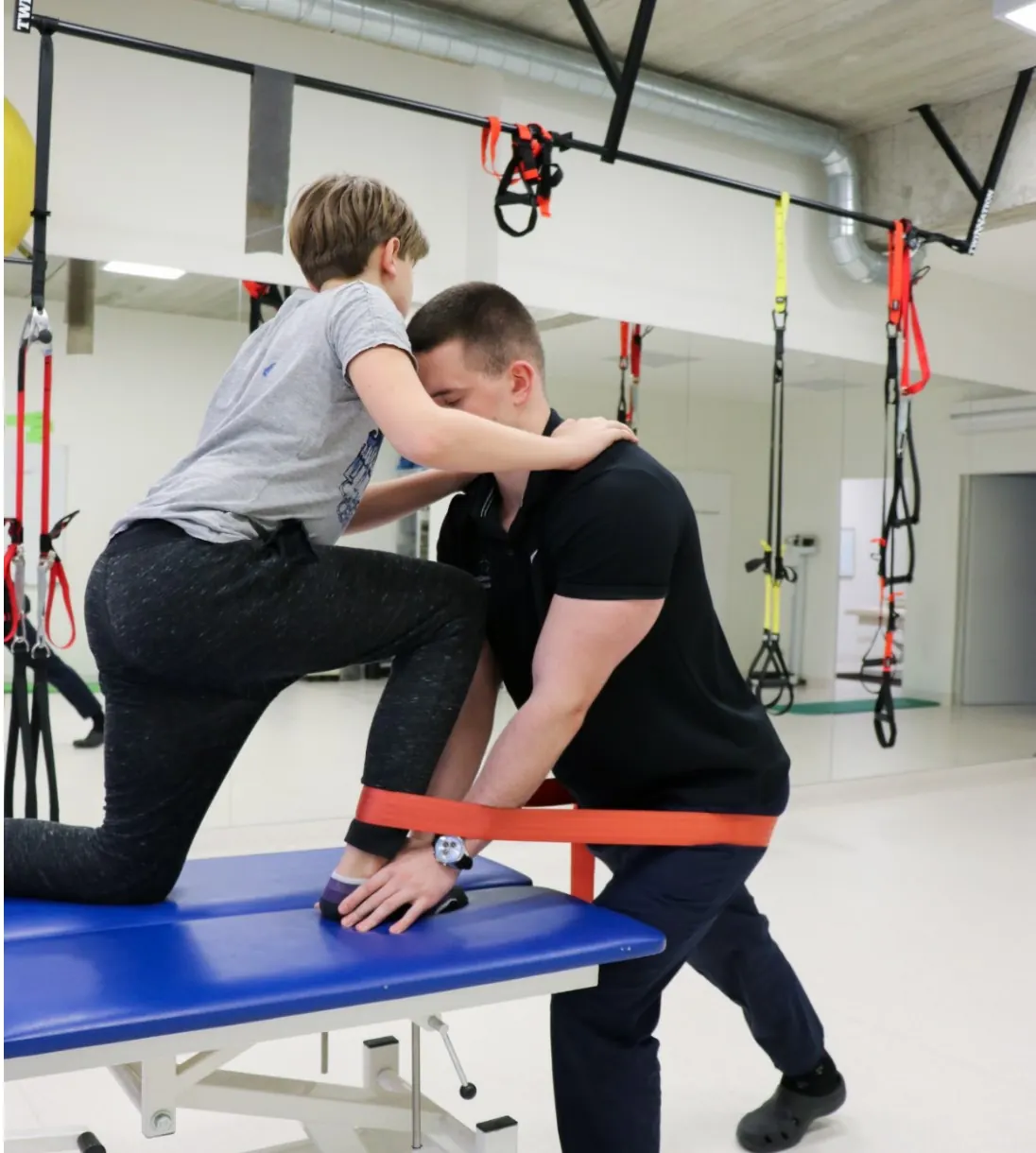
Physiotherapy
Movement therapy: active and passive techniques that help renew, improve and maintain the condition of muscles, bones, blood vessels and nervous systems.
first visit 70 €Read more
Sports physiotherapy
Rehabilitation and injury prevention for professional athletes and active sportsmen.
first visit 70 €Read more
Exercise programs for treating back pain
A standardized exercise program for treating back pain.
from 30 €Read more