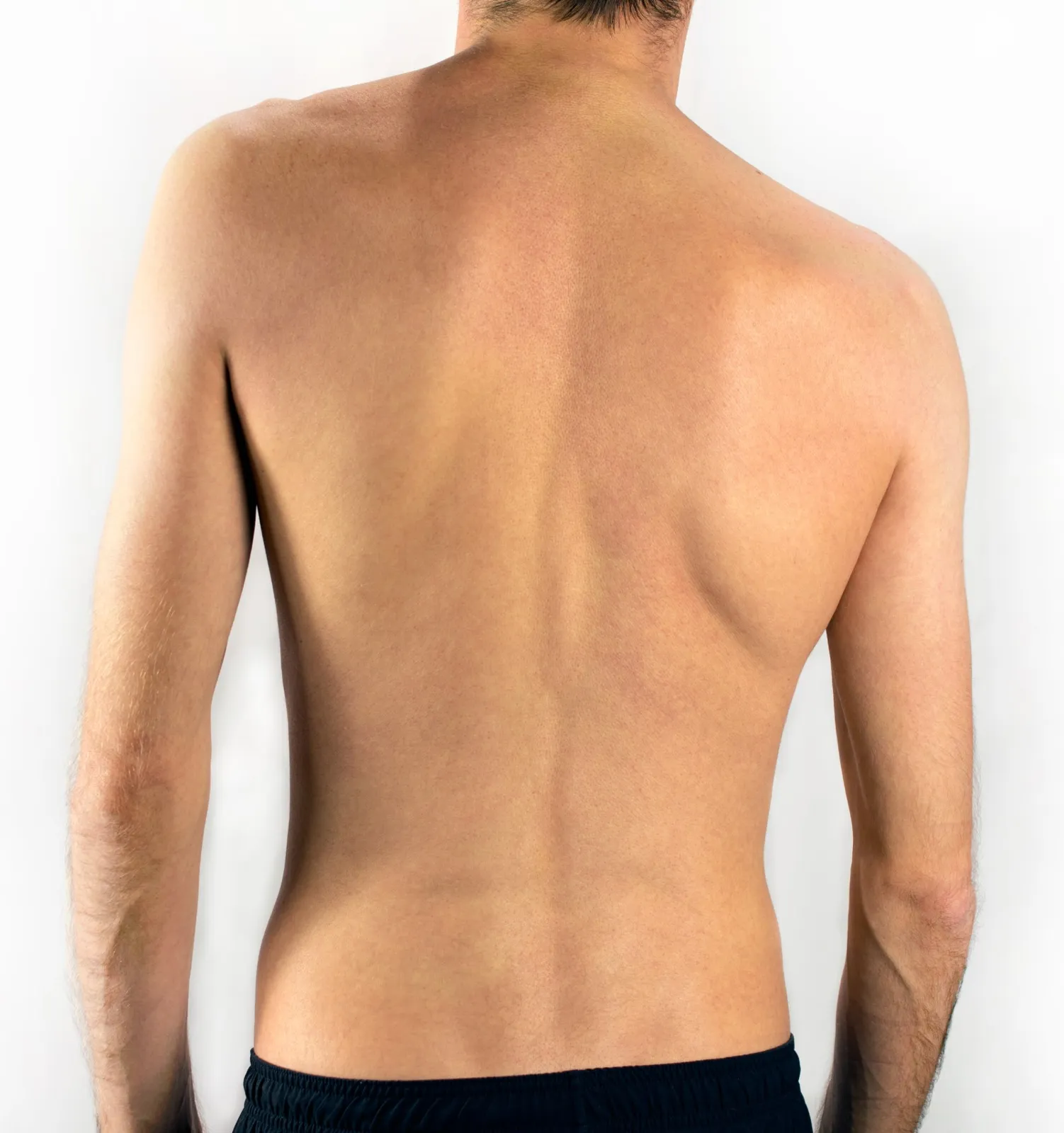
Distortions of the spine
Distortion of the spine at an early stage, before it causes any unpleasant sensations, is imperceptible to a person, so it is often too late to contact specialists.
- Topic
- Spine
- Reading time
- 6 minutes
Distortion of the spine at an early stage, before it causes any unpleasant sensations, is imperceptible to a person, so it is often too late to contact specialists.
Patients who are already suffering from back pain caused by curvature of the spine, clearly visible asymmetric position of the shoulders and hips, curvature of the spine to one side or the other, forward or backward, usually come to the Kineziterapijos Klinika. This shows the connection between posture, nerves, muscles, skeleton and internal organs, i.e. organs cannot function optimally without proper support - they are pressed and overloaded. Muscles with poor posture are either weak and overstretched or short and tight. Specialists of the clinic, after carefully examining the patient and assessing the degree of spinal curvature, the disease, and its cause, individually select the best treatment for each patient.
The most common spinal deformities:
Scoliosis is a sideways curvature of the spine. In the early stage, changes in the spine are often invisible to the person and others. As the disease progresses, a person's spine twists sideways and takes on a "C" or "S" shape. Due to the disease, the vertebrae of the spine rotate, the ribs attached to them, the chest deforms, and a hump appears. If scoliosis is not treated, not only the appearance of the person changes, but also the functioning of the lungs, blood vessels and heart are disturbed.
Kyphosis - an excessively deep inclination of the spine to the rear, when a person looks hunched over, his back is hunched.
Lordosis - excessively deep curvature of the spine forward. With this type of spinal curvature, the person appears to be leaning back heavily.
Spinal curvature is usually caused by the following reasons:
Improper lifestyle Spinal distortions gradually develop due to incorrect posture: lying on a soft bed, using a high pillow, children sitting on a chair that is not suitable for their height, studying at a table that is not suitable for their height, carrying a heavy backpack on their back or carrying it in one hand. At an early age, before a child's spine and cartilage are ossified, their posture is most vulnerable. In adolescence, the spine is often twisted due to its overload during sports, choosing excessive physical exertion. For people of working age, the spine may deviate from long and uncomfortable standing or sitting. Distortions of the spine caused by prolonged sitting in an irregular position at the computer are becoming more common. Women can also develop spinal deformities due to wearing high-heeled shoes.
Injuries and Pain The spine can become misaligned due to the shortening or amputation of one leg, a fracture or dislocation of a vertebra, or any other injury that forces you to adjust your posture. Nerve root entrapment, brachial plexus hypersensitivity, and other pain-causing nerve problems cause a person to unconsciously change their body position to relieve that pain. A neurodynamic component may also play a role in this. Often, a faulty posture is formed due to previously occurring neurodynamic problems, when the body, trying to avoid pain due to nerve irritation, tries to be in a painless position, which gradually becomes the natural posture of the body. Over time, antalgic (pain-relieving) positions become a habit, thus forming an irregular posture.
Pregnancy Pregnancy can cause spinal and postural distortions for both the pregnant woman and the baby. During pregnancy, the ligaments of the abdomen and pelvis are often stretched, lumbar lordosis increases, and the muscles of the abdomen and buttocks weaken. And during infancy, due to breastfeeding and constant carrying of the baby in the arms, the areas of the neck and thoracic spine are stretched. Therefore, it is very important to take steps as soon as possible after pregnancy to regain muscle balance. Meanwhile, congenital postural changes usually also occur during pregnancy. The reasons are very diverse: genetic (inheritance), toxic or mechanical, when for one reason or another the fetus is in an uncomfortable position and is under pressure. Most often, pathologies are observed in the anatomy of bones and muscles.
There are also forms of spinal curvature, the causes of which are unknown. Scoliosis of unknown origin is called idiopathic. As a result of such scoliosis, the vertebrae and their shapes are significantly changed. However, it is worth noting that idiopathic scoliosis is diagnosed too often, and the reason for this is insufficient detailed and careful examination or insufficient competence of the doctor, because the majority of scoliosis cases are perfectly explained by specialists with a wider profile of knowledge.
Treatment of irregular posture and spinal deformities
Manual therapy - this method restores the correct biomechanics of the joints and spinal vertebrae, relaxes back muscle tension, which makes it easier to correct posture and relieve acute and chronic back pain associated with spinal deformities. This form of therapy is often used to treat scoliosis.
Functional neurology can be a very effective tool in addressing poor posture and spinal misalignment. Although structural damage cannot be quickly cured with its help, receptor dysfunctions can be fixed, thus reducing pain, improving proprioception, muscle activation, which will make it easier for the body to naturally return to a symmetrical position, and safer to train muscles.
Physiotherapy (movement therapy) - during special exercises, the muscle-bone system is balanced and disturbed biomechanics are corrected - thus, in case of irregular posture, distortion, the spine is helped to "choose" a more suitable space for it. Asymmetric and other exercises are used to correct the posture caused by scoliosis.
Physiotherapy using medicine balls - for each individual, taking into account the degree of curvature of the patient's spine, the disease, its origin, exercises correcting irregular posture are applied. Back and abdominal muscles are strengthened, muscle endurance is increased. Balancing exercises using medicine balls improve balance, coordination, and force the deep and stabilizing muscles to work, which are extremely important for improving posture.
Therapeutic massage - with various massage techniques, weakened and strained, shortened back muscles, deformed, bulging chest, abdominal muscles are strengthened, connective tissue and muscle adhesion, spine mobility is increased, pain points formed in the muscles due to incorrect posture are relaxed with various massage techniques.
Taping. Taping is an easy-to-apply technique that stimulates/encourages muscle activation. This method is used to stabilize joints, correct position, stimulate muscle activation, inhibit muscle activity, relieve pain, improve sensitivity of motor neurons, and lymph flow.
The spine is the supporting axis of a person. It contains the natural curves of the spine, which are necessary to keep the back strong, firm and flexible. The muscles located in the back form its shape and relief, control the posture, and stabilize the spine. When the muscles weaken, it becomes difficult to keep the spine in the right position, so it deforms under the influence of various forces, and signs of spinal curvature begin to appear.
Statistics show that about 3.5 percent of people suffer from spinal deformities. of children. The first signs of spinal curvature can appear as early as six (for girls) - eight (for boys) years, and they usually appear in adolescence and can progress until the human skeletal maturity (20-22 years).
The physiotherapy clinic treats various types of spinal misalignment: from irregular posture and the early phase of spinal misalignment to advanced disease.
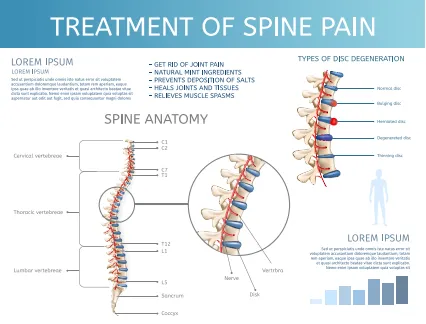 Dysfunctions and pathologies of the spineBack pain is one of the most common complaints of people, which partially or greatly interferes with the quality of life and daily activities. Statistics show that these pains cause the most missed work...Read
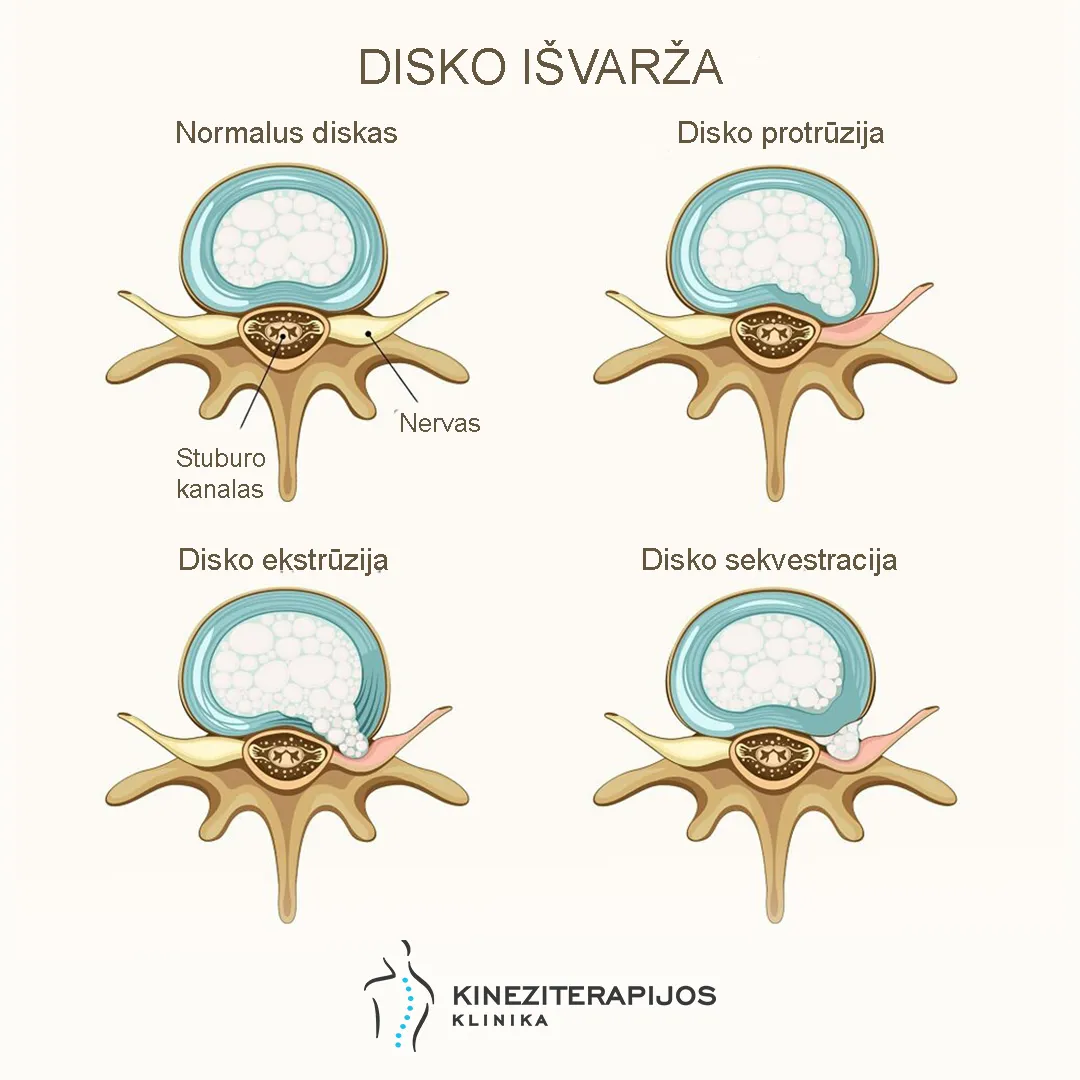 Spinal herniaAn intervertebral disc is a connective tissue formation that connects two vertebral bodies and is composed of a soft nucleus and a fibrous annulus. A herniated disc of the spine or intervertebral disc is...Read