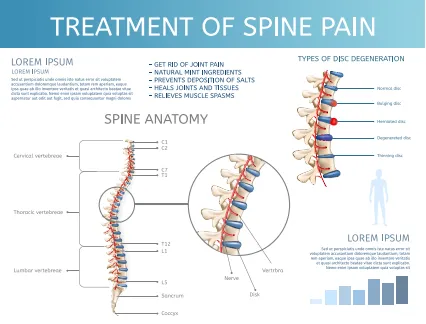
Dysfunctions and pathologies of the spine
Back pain is one of the most common complaints of people, which partially or greatly interferes with the quality of life and daily activities. Statistics show that these pains cause the most missed work...
- Topic
- Spine
- Reading time
- 2 minutes
Back pain is one of the most common complaints of people, which partially or greatly interferes with the quality of life and daily activities. Statistics show that these pains account for the largest number of days lost from work each year. Most often, pain occurs due to various dysfunctions and pathologies of the spine. Spinal pathology is a condition where pain or other symptoms occur due to structural changes in the spine (vertebrae, intervertebral discs, transverse, ridge processes, ligaments, plates). Pain caused by pathologies of the spine is also called vertebrogenic pain. Spinal dysfunctions are pain, movement or other disorders caused by a certain imbalance of muscles or other structures, which can occur even if there is no specific structural damage.
The most common spinal dysfunctions and pathologies
Osteochondrosis Intervertebral disc herniation Bechterev's disease - Ankylosing spondylitis Facet joint syndrome (pain) Spinal vertebrae pathologies (spondylosis, spondylolysis, spondylolisthesis)
The main causes of spine dysfunctions and pathologies
• Long-term static position (sitting, standing); • Monotonous repetitive movements; • Irregular lifting/carrying of heavy objects; • Unergonomic work environment (long working hours, uncomfortable positions, uncomfortably equipped work environment, excessive physical exertion); • Stress; • Non-specific spinal pains are associated with smoking, genetic factors (heredity), family history of pain, poorer education, obesity, female gender, poor economic and social status, and poorer education; • The cause of spine dysfunction is associated with muscle imbalance, passive lifestyle, changes in nutrition and weather conditions (dysfunctions increase in winter).
Treatment of spine dysfunctions and pathologies
The treatment of all the above spinal dysfunctions and pathologies is highly individualized and depends on each person's symptoms, level of damage and condition. For example, in the treatment of a herniated intervertebral disc, it is important whether it is medial or lateral or central and whether there is spread of symptoms to the leg/s. The treatment of spondylolisthesis depends on whether it is antero (the vertebral body has moved forward), retro (the vertebral body has moved backward), or latero (to the side). Rotational movements often help in the treatment of Bechterew's disease. Therefore, when choosing a treatment, the most important thing is a functional examination, with the help of which it is possible to determine what the treatment strategy and applied methods should be. It can be both therapeutic exercise - to improve blood circulation, muscle activation and strengthening, and functional neurology - to eliminate receptor dysfunctions, and manual therapy - to reduce pain, improve blood circulation and relax soft tissues, improve joint mobility, or other treatment methods. In some cases, surgical intervention is required, followed by conservative treatment with exercises, physiotherapy, manual therapy, applied kinesiology, functional neurology, physiotherapy, etc.
 Distortions of the spineDistortion of the spine at an early stage, before it causes any unpleasant sensations, is imperceptible to a person, so it is often too late to contact specialists.Read
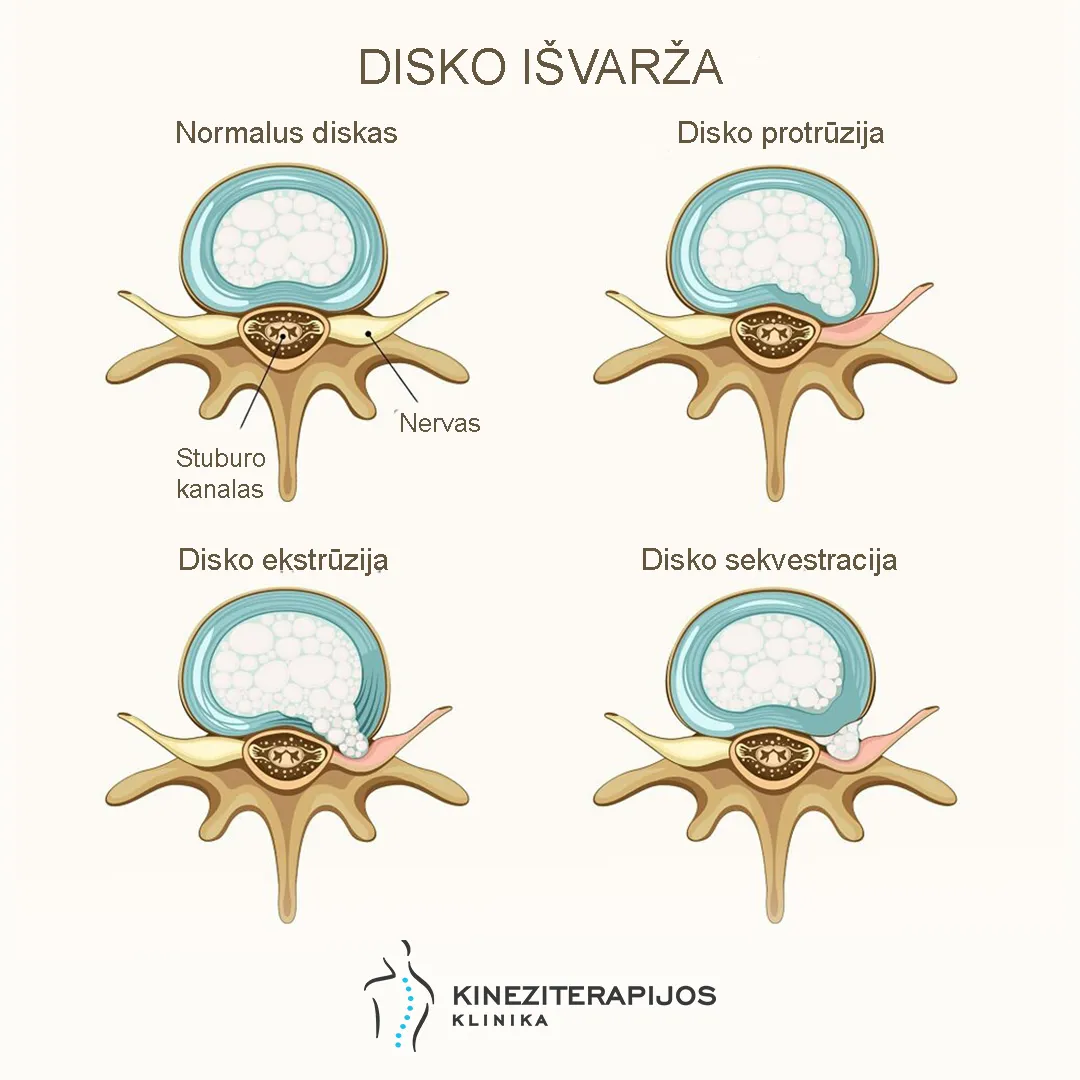 Spinal herniaAn intervertebral disc is a connective tissue formation that connects two vertebral bodies and is composed of a soft nucleus and a fibrous annulus. A herniated disc of the spine or intervertebral disc is...Read