Exercises for the eyes
Many people are probably familiar with the situation when, together with the appearance of symptoms, they start searching for information on the Internet about the origin of symptoms and possible diseases. Often, the information found is interpreted...
- Topic
- Treatment methods
- Reading time
- 5 minutes
Many people know the situation: when symptoms appear, they start searching the internet for their cause and possible diseases. The information found is often misinterpreted, and a self-made "diagnosis" causes even more anxiety. The next step is looking for ways to treat that diagnosis yourself, if at all possible. A vicious circle begins in which a person can harm themselves even more.
Sore eyes. What to do?
Recently we have noticed growing interest in eye problems and eye exercises. As with any other condition, there is plenty of information online, but it is important to choose the right information, and without the relevant knowledge it is hard to judge it selectively. Say you sometimes see double. This symptom can point to increased eye strain, cataracts, diplopia (double vision) and other conditions. Guessing and comparing accompanying symptoms with those of various conditions will hardly solve the problem. An accurate diagnosis needs a specialist consultation, which will help solve your problem much more effectively and in less time.
Benefits of eye exercises
Different eye exercises not only strengthen the eye muscles but also improve balance, visual acuity and cerebellar function, and they are an important part of treatment for concussion, double vision, squint and impaired depth perception. What all eye exercises have in common is that some muscles are inhibited and others activated while doing them. That is why it is essential to choose the right exercises specifically and know their direction, intensity and dosage. In practice, people who cannot properly assess their situation and the specifics of the exercises sometimes overstrain muscles that are already overstrained. The belief that the more often you exercise, the faster your condition will improve, unfortunately does not always hold.
Individualised eye exercises
A common cause of vision problems is a dysfunction of the muscles that move the eyes. So just as the large muscles of the body are trained, the small muscles need attention too. Note that not all eye exercises are suitable for treating vision problems, so clinical reasoning is essential for choosing and dosing the right exercises.
In the eye exercise sessions organised by Kineziterapijos Klinika, each participant is first assessed individually. The physiotherapist uses special tests to identify muscle function problems and find out which muscle is overstrained or not working at all. After a thorough assessment, an individualised eye exercise treatment is created:
- If a muscle is overstrained, eye exercises that inhibit its function are prescribed.
- If a muscle is not working, eye exercises that activate its function are prescribed.
For the most effective treatment, the physiotherapist also assesses other factors that affect eye movements and the symptoms they cause: motor control, coordination, cerebellar function and neck muscle tension, and recommends the most effective eye exercises for each individual situation.
Eye exercises for specific conditions
Below are some example exercises for concussion or vestibular disorders. In these disorders, cerebellar function is altered, but to activate the cerebellum you first need to assess which side of the cerebellum is hypoactive and which hyperactive. The results show which side needs activation. After assessing both sides, exercises are chosen and adapted specifically in terms of intensity, dosage and direction of movement. During the exercises, the objects you focus on (a finger, a pencil or other items) must always be clearly visible. If you start to feel dizzy, reduce the intensity and do the exercise more slowly until the unwanted symptoms stop.
Horizontalios sekados
Hold your thumbs up with arms outstretched (or hold two brightly coloured objects) in front of you at shoulder width and eye level. Depending on your condition, the distance between the objects can be reduced or increased. Focus on one object, and on a signal move your gaze as fast as possible, without stopping, from one object to the other and back, as many times as you can. The objects must not blur, and your gaze must stop at each object and fix it clearly. Do the exercise for 30 seconds.
Atstumimai dvejinimuisi
Sitting, hold a pencil at arm's length and focus on it. Keep following the pencil with your eyes and move it steadily towards your face until the image starts to double. Hold the pencil and your gaze for a few seconds where the image started to double. Without looking away, move the pencil back to where the image stops doubling and hold there for a few seconds. Then relax and stretch your arm out in front of you. Repeat 5-8 times. The exercise can progress to standing.
Sekimas ratu
Hold a brightly coloured object (a pencil) at arm's length in front of you and focus on it. Without moving your head, move the object in a circle clockwise and follow it with your eyes for 30 seconds. Then change direction and move it anticlockwise for 30 seconds. Progressions are possible.
Vestibulo-ocular training
Standing, hold a pencil in front of you with both arms slightly bent and focus on its tip. Keeping your gaze on the pencil, turn your head left and right without taking your eyes off it. Do the exercise for 30 seconds, then rest for 20 seconds. After the rest, repeat while moving your head up and down for 30 seconds. Several progressions are possible.
Intensity of eye exercises
It is especially important not only to choose the right eye exercises but also to consider their intensity and dosage. When you start eye exercise sessions, lower-intensity exercises are recommended, with the intensity increased gradually. The wrong intensity can even make the condition worse, because the eye muscles are not used to the load and get overtired. Thanks to small groups, the physiotherapist can give each participant individual attention, follow everyone's progress, adjust the intensity and, if needed, change the eye exercise programme.
For more information about the eye exercise sessions at Kineziterapijos Klinika and to sign up, email info@kineziterapijosklinika.com or call +370 682 21 414.
 Disorders of the lymphatic systemThese are the main symptoms of a possible malfunction of the lymphatic system.Read
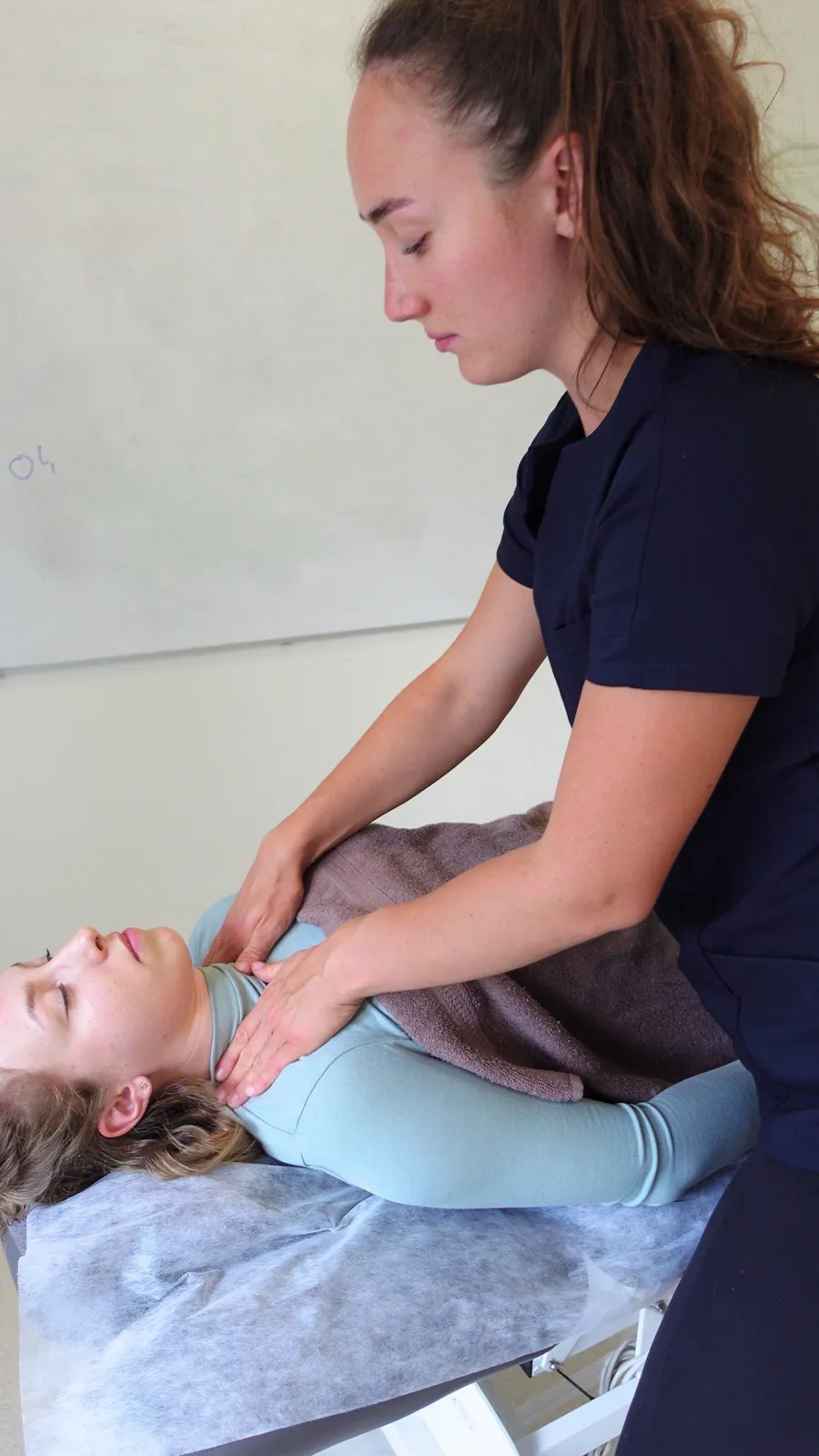 Lymphatic drainage massage in KaunasLymphatic drainage massage is a gentle, shallow massage using slow, rhythmic movements performed with the hands in the direction of lymph flow. It is a pain-free massage. During the massage, you will only feel a gentle stretching of the skin...Read
 INDIBA therapyINDIBA THERAPY - a revolutionary treatment method for acute pain, joint, muscle, tendon, and bone damage. INDIBA technology uses a unique and patented 448 kHz radio frequency that stimulates...Read