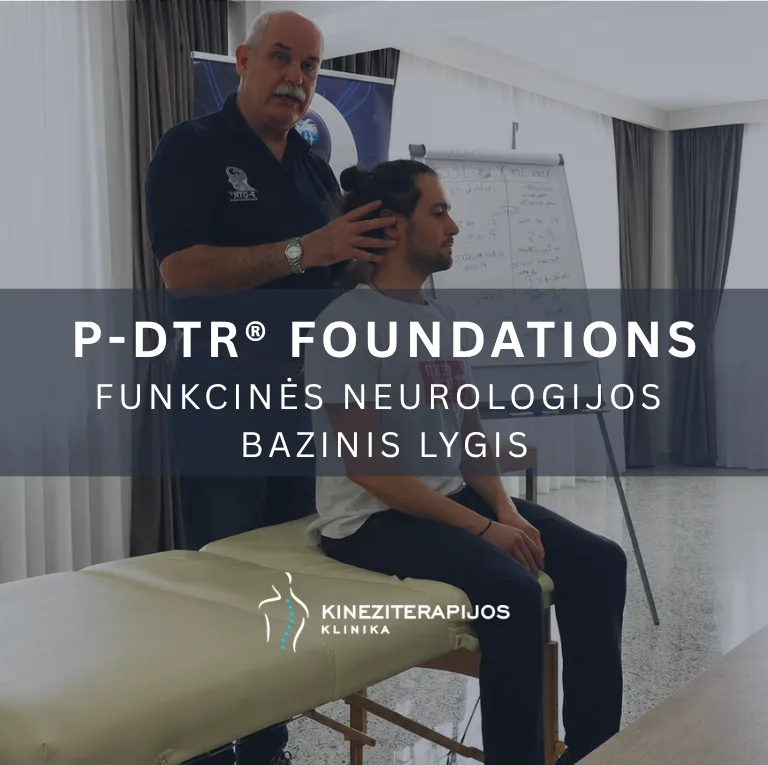
P-DTR® Foundations. Functional neurology basic level
- Price
- from €1,200
- Date
- in 2026 December 1
- Venue
- Kaunas
Dates, plans and prices
P-DTR® FOUNDATIONS. BASIC LEVEL OF FUNCTIONAL NEUROLOGY
P-DTR® FOUNDATIONS. FUNCTIONAL NEUROLOGY BASIC LEVEL + P-DTR® Pre-Seminar Mastery Day. Manual muscle testing
PDTR® FOUNDATION MODULE 2. Pressure and vibration dysfunctions. Neurology of gait I and II
P-DTR® is the world's first neurological manual therapy based on neuroreceptor testing. It is a scientifically based system that allows you to achieve precise diagnostics and sustainable results in the restoration of body functions.
Upcoming events: - P-DTR® FOUNDATIONS. BASIC LEVEL OF FUNCTIONAL NEUROLOGY. MODULE 1 : 2026 December 2-6
- PDTR® FOUNDATION MODULE 2 : 2027 February 24-28
About the seminar:
P-DTR® Foundations: Module 1 The first step into functional neuroscience with method creator Dr. Jose Palomar. This workshop is an essential foundation in which you will begin to learn to "communicate" with the patient's nervous system.
The first module is designed to understand the fundamental rules of P-DTR and to learn how to correct the main mechanoreceptors that are mostly responsible for muscle tone disorders and primary pain.
The purpose of the workshop: to calibrate your hands to the highest P-DTR standards. If your "instrument" (arms and testing technique) is not calibrated, the results will be poor. This day will help you feel confident, work more precisely and achieve results.
Many specialists make critical mistakes: incorrect pressure vector, excessive force, delayed response capture or failure to observe patient compensations. This leads to misdiagnoses and poor treatment outcomes.
Why choose P-DTR®:
- Finds the cause, not the symptom: through the receptor system, it is determined where the nervous system is "wrong".
- Fast results: often the pain or limitation of movement disappears within seconds by "overloading" the wrong signal.
- Scientific accuracy: The methodology is based on neurophysiology and functional testing, without any guesswork.
The seminar is intended for: - Physiotherapists - Osteopaths - Applied kinesiology specialists - Manual therapy specialists - Chiropractors - Neurologists - Orthopedists-traumatologists - Other healthcare professionals
Seminar price: For the first 15 participants - the price is 1200 Eur! It will be expensive later!
If you do not have manual muscle testing skills or want to improve them before the workshop, we recommend that you attend the pre-workshop mastery day. For participants of the P-DTR® seminar, the price of this (one-day) seminar is €100
More on Manual Muscle Testing Day: P-DTR® Pre-Seminar Mastery Day. Manual muscle testing
IMPORTANT!!! Modules 2 and 3 are for participants who have completed module 1!
Description and program of module 1
CONTENT AND PROGRAM OF THE SEMINAR:
- Introduction to P-DTR: You will understand the essence of the methodology, the neurological basis and the main principles of operation.
- Rules and modes: You will master work algorithms and functional modes.
- Autogenic inhibition (Lines X and II): You will learn to modulate muscle response through specific neurological stimuli.
- "Switching" and Hypertonus: You will learn how to correct the neurological "entanglement" of the brain and identify the real causes of increased muscle tone.
- Introduction to Mechanoreceptors: You will understand how the brain interprets mechanical stimuli from the environment and inside the body.
- Muscle Spindles (Bags and Chains): You will learn to work with the receptors inside the muscle responsible for muscle length and tension.
- Reactor/reactives: You will master one of the most important tools of P-DTR - the ability to distinguish priority dysfunction from compensatory dysfunction.
- Pacini and Golgi receptors: You will learn to correct errors in vibration, deep pressure and tendon tension receptors.
- TS line: You will understand the role of the Temporo-Sphenoidal line as the main indicator of body adaptation.
- Nociception: You will learn about the activity of pain receptors and the processing of pain signals.
- Neo/Paleo Dysfunctions: You will learn to differentiate and treat disorders of the old (primitive) and new neural pathways.
Module 2 description and program
PDTR® FOUNDATION MODULE 2 (LEVEL 2) Pressure and Vibration Dysfunctions. Neurology of gait I and II (February 24-28, 2027)
The second module of the P-DTR Foundation takes you from the basics to whole body neuromapping. You will learn how each ligament, joint capsule, and gait phase relates to specific muscles, how to find the actual problem area during gait, and how to work with pressure and vibration receptors. After this module, you will begin to see connections you never saw before: why ankle ligaments can weaken neck muscles and pelvic ligaments can cause shoulder problems.
WHAT WE WILL LEARN IN MODULE 2:
- A map of ligaments and muscles throughout the body: pelvis and sacrum, hip, knee, ankle and foot, chest, shoulder, elbow and wrist, spine.
- Rules of ligaments, joint capsules, hyaline and fibrocartilage: when tissue facilitates, when inhibits and why.
- Special structures: talus, hyoid bone, earlobes, nose and lips - and their effect on the whole body.
- Neurology of gait: sensory information in gait, support and bridge phases, automatic gait, role of the cerebellum, inhibition of gait.
- Pelvic categories are one of the most common and clinically valuable areas of dysfunction.
- Pressure and vibration receptor dysfunctions.
- Joint position proprioceptors: why a muscle is only weak in a certain joint position.
AFTER THE SEMINAR YOU WILL LEARN:
- Palpate the major ligaments of the body and test the muscles associated with them.
- Distinguish between capsular and non-capsular dysfunction according to clear rules.
- Use gait as a diagnostic tool to find the primary site of dysfunction more quickly.
- Assess and adjust pelvic categories.
- Find and correct pressure and vibration receptor dysfunctions.
- Work with patients whose problem recurs despite previous treatment.
PREREQUISITE Completion of P-DTR Foundation Module 1.
Seminar price: Registration by December 1. - discount applies - price 1200 Eur! When registering from December 1, the price is EUR 1300
- Pressure and vibration dysfunctions
- Neurology of gait II
- Localization of nerve endings
- Muscle rules
- Joint capsular and non-capsular rules
- Rules of articular hyaline cartilage
- Rules of articular fibrocartilage
- Spinal ligament rules
- The rules of the talus
- Rules of the hyoid bone
- Earlobe rules
- Nose rules
- Lip rules
- Whole body ligament analysis
- Neurology of gait I
- Gait: types of sensory information
- Effect of pacing frequency on support and bridge phases
- Automatic gait
- Cerebellum and gait
- Gait phases
- Gait inhibition
- Pelvic categories
- Joint position proprioceptors
Module 3 description and syllabus
PDTR® FOUNDATION MODULE 3 (LEVEL 3) Temperature and tactile receptors. Adrenal glands and emotions. Skull, TMJ and teeth
The third module of the P-DTR Foundation completes the fundamentals cycle and expands the work beyond muscles and ligaments. You will learn to work with temperature, touch, tickle and itch receptors, spinal and limbic fixations, adrenal stress, emotional dysfunctions, meridians and the skull, jaw and teeth system. After this module, you will have the full Foundation toolkit and begin to assess the patient as a whole: why cold or heat can weaken a particular muscle, how emotional stress is reflected in a muscle test, and how one tooth can be related to a problem in a completely different part of the body.
WHAT WE WILL LEARN IN MODULE 3
- Temperature and touch receptors: cold and heat receptors, tickling and itching, soft and rough touch - their wiring, inhibition patterns and correction.
- Spinothalamic dysfunctions: ascending sensory systems and their influence on muscle function.
- Spine fixations: occiput, sacrum, vertebrae and limbic fixation - determination by therapeutic localization and correction.
- Adrenal glands and stress: general adaptation syndrome, signs of physical, chemical, emotional and thermal stress.
- Meridian dysfunctions from a P-DTR perspective: alarm points, related muscles, cycles.
- Emotional dysfunctions: quick emotional corrections, psychological reverse, complete emotional correction.
- Stomatognathic system: cranial and sutural dysfunctions, sacral respiratory function, TMJ, hyoid bone, and neurodental.
YOU WILL PAY AFTER THE SEMINAR
- Find and correct temperature, touch, tickle and itch receptor dysfunctions.
- Set and adjust occiput, sacrum, vertebrae and limbic fixations.
- Recognize the signs of adrenal stress and incorporate them into your treatment plan.
- Assess and correct meridian dysfunctions.
- Make a quick and complete emotional correction.
- Assess the influence of the skull, TMJ, hyoid bone and teeth on the function of the whole body and correct it.
PREREQUISITE Completion of P-DTR Foundation Modules 1 and 2.
- Thermal nociception
- Cold and heat receptors
- Tickling and itching
- Soft and rough touch
- Vertebral and limbic fixation
- Fixation of the occiput, sacrum and vertebrae
- Spinothalamic dysfunctions
- Ascending sensory systems
- Adrenal glands
- General adaptation syndrome
- Meridian dysfunctions
- Emotional dysfunctions
- Quick emotional corrections
- Psychological reverse
- Complete emotional correction
- Stomatognathic dysfunctions
- Movement of the skull
- Dysfunctions of the skull
- Dysfunctions of cranial sutures
- Dysfunctions of the sacrum
- Temporal joint of the lower jaw
- Hyoid bone
- Neurological tooth
LECTURER:
Dr. Jose Palomar
The author of the method, who entered the medical university at the age of 17, received his medical education and qualification as an orthopedic traumatologist and completed his residency at the Central Military Hospital, performing his first orthopedic surgery at the age of 24. Later, he completed specialized training in minimally invasive spine surgery at the Texas Spinal Surgery Institute in the USA. Continuing his research on the human regulatory system, which he now calls the "software of the human body", he became a diplomat of the ICAK (International College of Applied Kinesiology) and received an honorary award from this organization for his scientific discoveries. Now, continuing the scientific research he started, Dr. Jose Palomar regularly teaches his method to doctors and therapists in Europe and America and continues to work in clinical practice in his native Mexico.
More information: phone +370 60344761 or email info@kineziterapijosklinika.com
More in this category
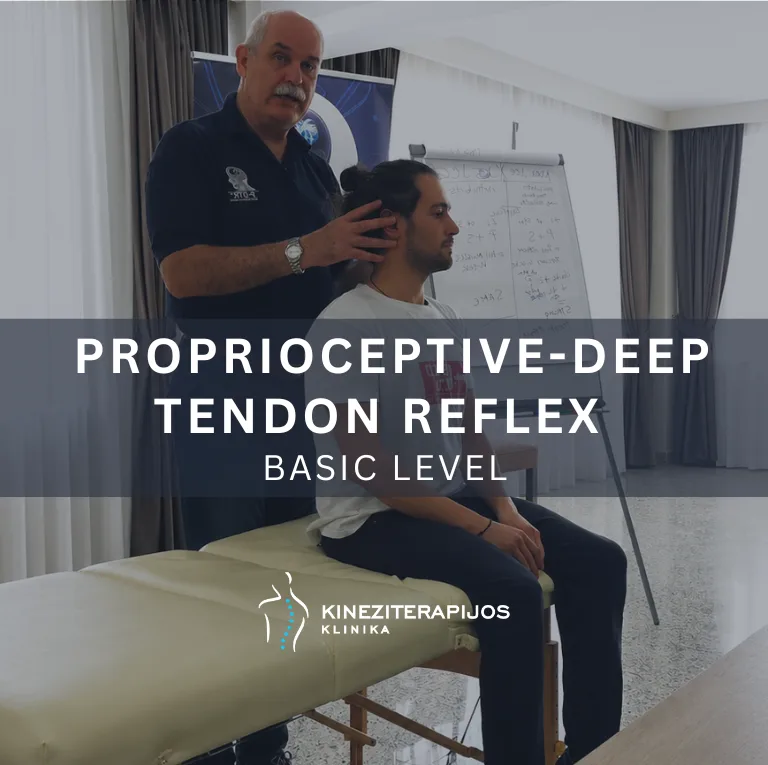
Proprioceptive-Deep Tendon Reflex. Basic level
P-DTR® is the world's first neurological manual therapy based on neuroreceptor testing. It is a scientifically based system that allows you to achieve precise diagnostics and sustainable results in the restoration of body functions.
from €1,200December 1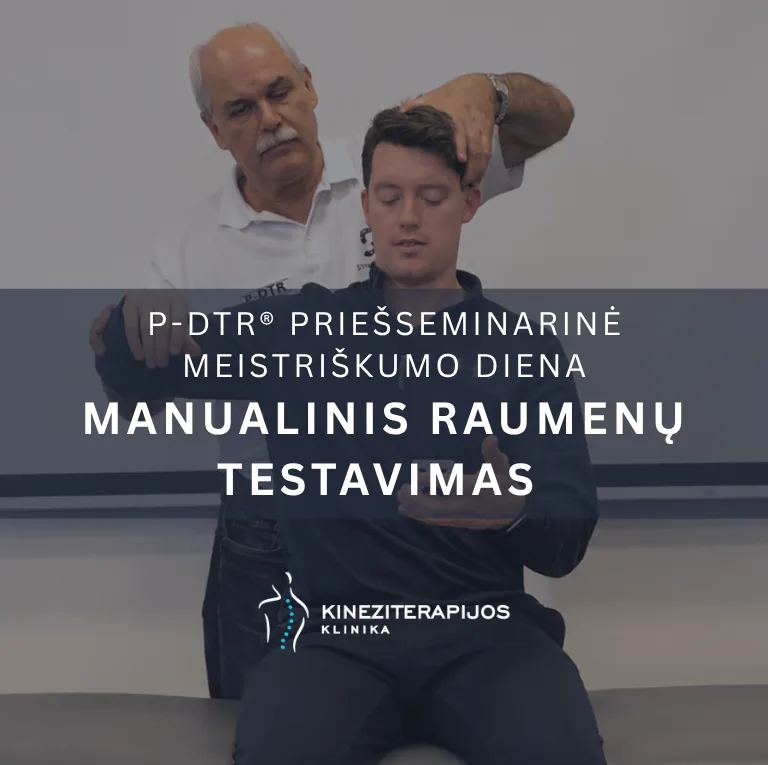
P-DTR® pre-course mastery day. Manual muscle testing
This is an exclusive opportunity to participate in a manual muscle testing (MRT) master day with Dr. Jose Palomar!
200 €December 1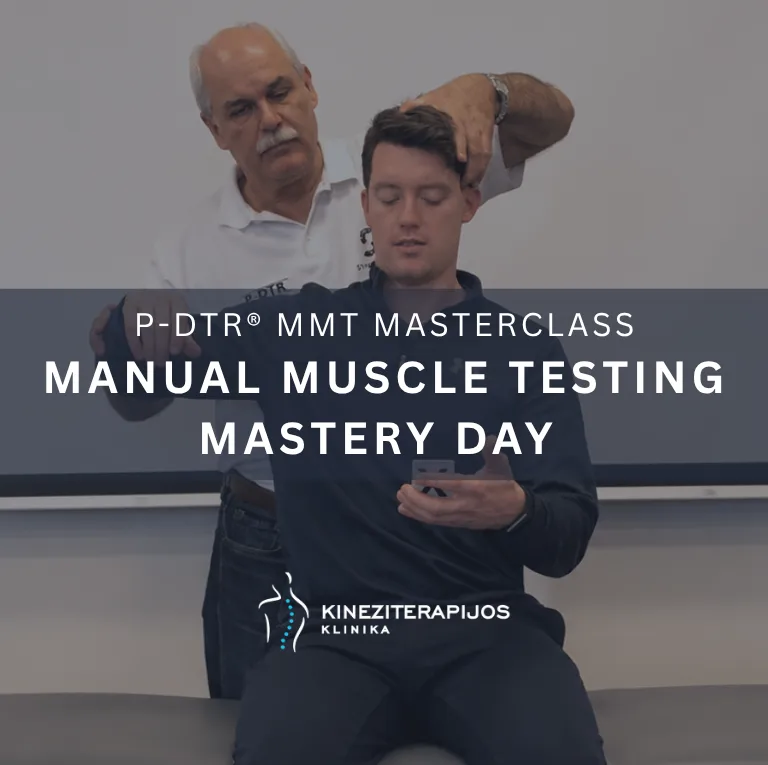
P-DTR® MMT Masterclass: Manual Muscle Testing Mastery Day
This is an exclusive opportunity to participate in a manual muscle testing (MRT) master day with Dr. Jose Palomar!
200 €December 1