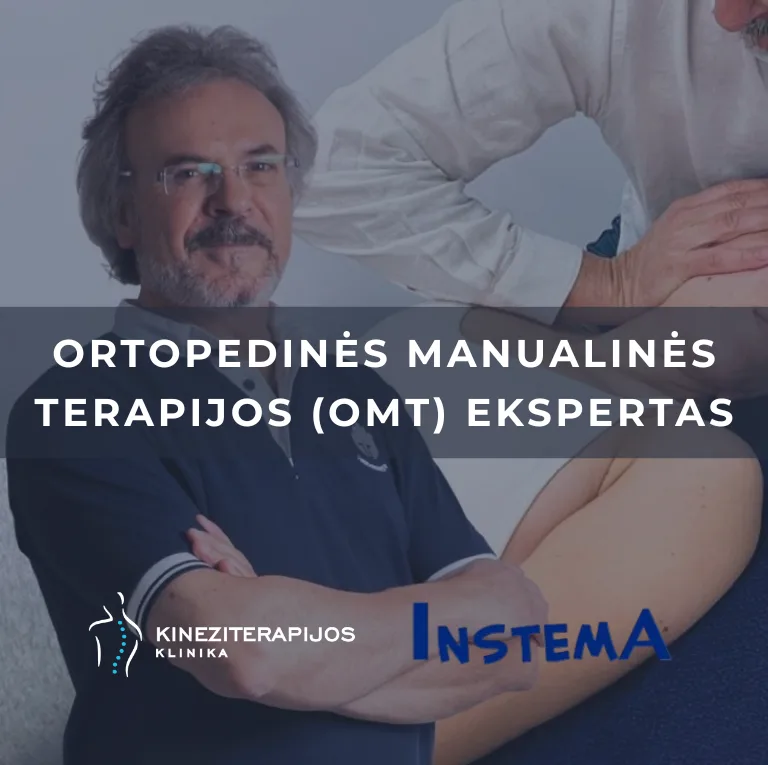
Orthopaedic manual therapy (OMT) expert
- Price
- from €600
- Date
- In progress
- Venue
- Kaunas
Dates, plans and prices
Cycle 2. Expert in Orthopedic Manual Therapy (OMT): Lumbar area
CYCLES 2-8. Expert in orthopedic manual therapy (OMT).
CYCLES 2-14. Expert in orthopedic manual therapy (OMT).
Manual therapy is an essential tool for the physiotherapist in the treatment of pathologies and dysfunctions of the mobile apparatus - one of the most common reasons for patients' referrals - as well as various functional syndromes, the proper management of which is extremely important for the patient's recovery.
Upcoming events: - Neuroanatomy, neurophysiology and neurobiology of pain in manual therapy: 2026 July 24-26 - Orthopedic manual therapy (OMT) expert: Lumbar area: 2026 November 6-8
What is Manual Therapy?
According to the Spanish Association of Physical Therapists (A.E.F.), manual therapy is a part of physical therapy that includes a set of methods and actions with a therapeutic goal. It is applied manually, based on a detailed patient history and appropriate additional tests, affecting muscular, connective and nervous tissues. In this way, direct or reflex physiological reactions are caused, which help to balance and normalize various muscular, osteoarticular, organic and functional disorders.
The concept of these studies and its uniqueness
Currently, there are many methods based on manual therapy that are internationally recognized and approved by the International Federation of Orthopedic Manipulative Physiotherapy (IFOMPT), such as: Cyriax, McKenzie, Kaltenborn, Maitland, osteopathy, chiropractic, D. Butler's neurodynamic concept, myofascial therapy and many others.
All these methods are united by a common basis - manual therapy, both in terms of assessment and treatment, so they are considered exceptional methods in the clinical practice of a physiotherapist.
Most specialists know how to perform techniques, but only a few understand why they choose them and what is happening in the patient's body at the same second. If you are looking for deep clinical detail and want to end the distraction between short courses - INSTEMA (Spain) postgraduate studies are your final professional point. ACADEMIC WEIGHT AND 40 YEARS OF EXPERIENCE These are not regular seminars, but a 560-hour, rigorously evidence-based (EBP) system. The author of the program - Dr. Prof. Juan José Boscá (PhD) is a clinician with four decades of experience, whose methodology is recognized in Europe as one of the most comprehensive in the field of physiotherapy.
Purpose:
- To provide students with the necessary skills to effectively and evidence-based assess and treat patients
- To introduce the various tools, techniques and therapeutic strategies that enable a comprehensive assessment of pathology
- To improve students' manual skills and provide knowledge for continuous professional growth in the field of manual therapy
- Analyze the latest scientific evidence to understand the importance and value of manual therapy
- To create a dynamic, attractive and practically oriented learning structure
What forms the basis of these studies?
The program is designed to train the highest level diagnostician and technician. The quality of studies is ensured by five essential pillars:
- Neurobiology of Pain and the ANS: You will delve into the neurophysiological effects of manual therapy and the role of the autonomic nervous system (ANS) in the healing process.
- Manipulation of all joints of the body: You will master precise HVLA techniques and mobilizations not only for the spine, but also for all peripheral joints (from the shoulder arch to the small bones of the foot).
- Viscerosomatic Differential Diagnosis: You will learn to identify when back or shoulder pain is "reflected" from the internal organs (viscera), thus ensuring safe and accurate treatment.
- Craniofacial Complex and TMJ : A specialized module for temporomandibular joint dysfunctions and their direct relationship to posture and headaches.
- Deep Neurodynamics: Diagnostics and mobilization of peripheral nerves, integrated into the overall clinical picture of the patient.
ARCHITECTURE OF CLINICAL THINKING: "We don't teach mechanical movements - we shape your ability to manage the process"
Diagnostic depth: You will learn to deconstruct the patient's complaint through the prism of neurophysiology and find the real cause, not just relieve the symptoms.
Surgical Precision: Each technique will be performed with microscopic precision with a clear understanding of its effects on tissue and the CNS.
Complete system: In 2 years, you will put together a complete "puzzle" of a specialist - from foot biomechanics to modulation of brain activity.
Our promise: When you complete this program, you will have a definitive, science-based system. You will no longer need to look for any additional manual therapy courses.
Who are these courses for?
- For physiotherapists;
- For occupational therapists;
- For manual therapy specialists;
- For osteopaths;
- For doctors;
What language will be taught?
Courses are held in English, with direct translation into Lithuanian
Studies are divided into 14 cycles (560 hours in total).
Qualification:
- Diploma accredited by INSTEMA (Manual Therapy Postgraduate Studies Institute).
- Training accreditation: The seminar is accredited by SAM and registered in the METAS system. The certificates are suitable for obtaining/extending the licenses of doctors, physiotherapists and occupational therapists.
Upcoming dates:
Cycle 1. Neuroanatomy, neurophysiology and neurobiology of pain in manual therapy - July 24-26, 2026. Price: 600 euros. Attention! A discount applies to early registration! When registering until June 1, the price is 500 euros. !
Cycle 2. Orthopedic manual therapy (OMT) expert: Lumbar area - November 6-8, 2026. Price: 600 euros. Attention! A discount applies to early registration! When registering until October 18, the price is 500 euros. !
Cycle 1. Neuroanatomy, neurophysiology and neurobiology of pain in manual therapy
In recent years, physiotherapy has undergone significant changes - new techniques and methods of treating patients appear. Individual specializations are also being explored more and more: neurological, pediatric, musculoskeletal, respiratory physiotherapy, etc.
For this reason, this manual therapy expert training is launched to create a common approach that connects different areas of knowledge. For this, special attention is paid to the interaction between the biomechanical structure of the musculoskeletal system and the autonomic nervous system, in order to understand how these systems can support each other.
Objectives:
- To provide the physical therapist with a clinical understanding of the anatomy and physiology of the autonomic nervous system
- To introduce the fundamentals of ensuring optimal health for both patients and healthy individuals
- To teach the effects of manual therapy techniques on the autonomic nervous system
- Identify key areas important for activation of vasomotor activity throughout the musculoskeletal system
- Explain the interaction of different body systems, especially the relationship between biomechanics, the autonomic nervous system and biopsychosocial factors
Program:
- Principles of integrating the autonomic nervous system into manual therapy
- Neuroendocrine system
- Autonomic nervous system
- Musculoskeletal system
- Psychoemotional system
- Somatic control
- Biochemical (hormonal) control
- Emotional control
- A physiotherapist is an essential factor in the recovery process
- Anatomy and Physiology (Clinical Neuroanatomy)
- Sympathetic system
- Parasympathetic system
- Importance of activating vasomotor control through key zones: Key Zone 1: Cervical-Thoracic Junction (C7-Th1-Th2, 1st Rib, Stellate Node) Key Zone 2: Thoracic-Lumbar Junction (Th12-L1)
- How to activate and how to act with physiotherapy methods
- Th10-Th12
- Solar plexus
- The role of the serotonin system in pain inhibition
- Importance of the biopsychosocial factor
- Concept of sensitization
- Basics of regulation: Pituitary stimulation Solar or hypogastric plexus Posture
- Concepts of biomechanics of combined movements (White and Panjabi, Bogduk, P. Greenman, Fryette, etc.)
- Techniques to stimulate the autonomic nervous system through control of spinal biomechanics
Cycle 2. Expert in Orthopedic Manual Therapy (OMT): Lumbar program
The lumbar spine is one of the most common causes of musculoskeletal pain worldwide, and is one of the leading causes of disability, functional limitations, and health care costs. Evidence-based manual therapy remains a valuable clinical tool in the treatment of lumbar spine disorders, especially when combined with clinical thinking, patient education, and active rehabilitation strategies.
The aim of this module is to provide an up-to-date, critical and evidence-based approach to lumbar spine assessment and manual therapy. The workshop integrates principles of biomechanics, pain neurobiology, motor control, and contemporary musculoskeletal practice with an emphasis on clinical decision-making, patient safety, and scientific accuracy. Manual therapy is provided as part of a multifaceted, biopsychosocial model of care.
The overall goal is to train professionals to perform comprehensive clinical assessment and apply evidence-based manual therapy techniques to the treatment of the lumbar spine, integrating contemporary clinical thinking and patient-centered care models.
After completing this module, participants will be able to:
- Understand the functional and clinical biomechanics of the lumbar spine;
- Apply the principles of neurobiology of pain in the treatment of disorders of the lumbar spine;
- Perform a comprehensive clinical and functional assessment of patients with low back pain;
- Identify "red signals", "yellow signals" and risk factors related to diseases of the lumbar spine;
- Select and apply manual therapy techniques based on clinical reasoning and scientific evidence;
- Safely perform lumbar joint mobilization, manipulation and soft tissue techniques;
- Integrate manual therapy into a multimodal and biopsychosocial treatment method;
- Critically interpret the latest scientific literature on manual therapy of the lumbar spine.
- Anatomical and functional review of the intervertebral disc and discosomatic segment, its morphology, physiology and histology
- Factors and mechanisms that increase the risk of disc protrusion or herniation
- Learning the positioning of the therapist and the patient in order to correctly perform manipulative techniques
- Teaching the patient position to neutralize symptoms and reduce pressure on the disc
- Indications and contraindications of various manual therapy techniques
- Classification of protrusions and herniated discs
- Pathophysiology of disc degeneration
- Effects of exercise on a patient with a herniated disc
- Examination and interpretation of pain-relieving positions
- Basic concepts of radiological assessment and magnetic resonance imaging
- Diagnosis and evaluation of various disc dysfunctions
- Articulatory, myotensive and manipulative manual therapy techniques;
- Positioning methods;
- The sequence of treatment stages from the acute phase to complete recovery;
- Prevention.
Cycle 3. Spinal manipulation and sports program
Cycle 3. Spine manipulations and sports - January 8-10, 2027.
- Anatomy of the pelvic joint complex.
- Anatomical overview of muscles, ligaments, viscera and other soft tissues.
- Biomechanics of sacroiliac joint and sacrum.
- Tests for assessment of joints and soft tissues of the pelvic joint complex.
- Techniques of manual joint therapy of sacroiliac region and sacrum.
- Pelvic complex soft tissue therapy techniques.
- Internal organs (visceral) aspects in the pelvic region.
Cycle 4. Thoracic area: an opportunity for articular, soft tissue and manipulation techniques
Cycle 4. Thoracic area: articular, soft tissue and manipulation techniques - February 19-21, 2027.
- Anatomy of the surfaces of the back joints.
- Physiology and biomechanics of the joints of the intervertebral segment of the back.
- Transition zones and their significance.
- Learning the positions and parameters of applying various techniques.
- Joint or soft tissue techniques are used in the back.
- An introduction to the neuroanatomy and physiology of the autonomic nervous system and its relationship to the spinal cord.
- Back pathologies.
- Clinical application.
- Effects, indications and neurophysiological mechanisms of spinal manipulation.
- Effects of spinal manipulation.
- Goals of spinal manipulation.
- Manipulation and the neurovascular reflex.
- Indications for spinal manipulation.
- Mechanisms of action.
- Manipulation causes a muscular reflex.
- Mechanical effects of spinal manipulation.
- Cavitation effect in spinal manipulation.
- Neurophysiological mechanism.
- Antalgic reflex.
- Contraindications of pushing techniques.
- Conditional contraindications.
- Absolute contraindications.
- Reactions after manipulation.
- Direct techniques while lying on the stomach.
- Techniques in a sitting position.
- Side lying techniques.
Cycle 5. Neck area: neck pain, radiculopathy, cervical disc herniation program
Cycle 5. Neck area: neck pain, radiculopathy, herniated cervical discs - April 23-25, 2027.
- Anatomy and biomechanics of the neck region.
- Neurophysiological effects of manual therapy.
- How to interpret pain and its relation to the severity of the process.
- Neck and arm pain caused by intervertebral hernia.
- Arthrosis of the neck.
- Differential diagnosis.
- Anamnesis.
- Static and dynamic evaluation.
- Orthopedic and analytical neck mobility tests.
- Palpation of various structures.
- Identifying possible causes.
- Joint techniques.
- Muscle manual techniques.
- Manipulation techniques.
- Functional techniques.
Cycle 6. Cervicogenic headaches program
Cycle 6. Cervicogenic headaches - June 4-6, 2027
- Importance of neck pain, headaches and dizziness in physiotherapy.
- Headache - concept - classification.
- The most common pathologies manifested by headaches.
- A reflex pain radiating from the neck muscles, felt in the skull and face.
- Vertebral artery as a cause of headaches and instability.
- Intervertebral disc pathology - degenerative syndrome - consequences.
- Activation of the trigeminal-cervical system as a cause of headache.
- Examination of the upper cervical spine.
- The best evidence-based tests for the diagnosis of cervicogenic headaches.
- Vertebral artery test.
- Investigation of reflex muscle pain radiating to the skull and face.
- Posture and headache.
- Stress and headache.
- Muscle techniques - stretching.
- Neuromyological techniques.
- Myofascial release techniques. Skull - cervix - back.
- The main techniques of manipulation of the vertebrae of the middle part of the spine.
Cycle 7. Clinical thinking in physiotherapy program
Cycle 7. Clinical thinking in physiotherapy - September 24-26, 2027.
- What is clinical thinking?
- Theoretical foundations.
- Definition of pain.
- A model of a mature organism.
- Important concepts.
- Importance of psychosocial factors.
- Types of thinking.
- Thinking systems.
- Categories of hypotheses.
- The process of forming hypotheses.
- Anamnesis: content and structure.
- From history to examination.
- Cervical spine.
- Lumbar spine.
- Groin area.
- Elbows.
- Ankles.
Cycle 8. Shoulder strap and shoulder program
Cycle 8. Shoulder girdle and shoulders - November 5-7, 2027
Introduction
- Presentation of the course and its progress.
- General information about the shoulder joint complex.
- Study of the anatomy of the shoulder blade and shoulder: bone structures, ligaments and muscles.
- Practice 1: Anatomy of the shoulder girdle by palpation, bony landmarks and arrangement of structures.
- Biomechanical analysis of the shoulder.
- Clinical thinking and assessment.
- Practice 2: Clinical case - presentation of thinking models. Differential diagnosis.
- Practice 3: Orthopedic examination of the shoulder arch.
- Visual diagnostics.
- Overview of chains of lesions involving the upper extremity.
- Descending chain of trauma.
- Ascending damage chain (traumatic).
- Joint techniques (orthopedic manual therapy):
- Analysis of the main dysfunctions of the shoulder joint.
- Techniques: articulatory and manipulative.
- Practice 4: Healing techniques using various joint techniques.
- Neuromyological technique.
- Myofascial treatment.
- Practice 5: A therapeutic approach using connective tissue techniques.
- NERVE MOBILIZATION
- Knowledge of the anatomy of the brachial plexus.
- Nerve mobilization techniques.
- Practice 6: Application of various nerve mobilization techniques.
- Eccentric exercises and their importance for shoulder girdle recovery.
- Strengthening of the shoulder muscles, exercises to ensure the stability of the glenohumeral joint.
- Restoration of sports movement of the upper limb.
- Concluding summary and overview of key concepts.
Cycle 9. Upper extremity (elbow, wrist and hand) program
Cycle 9. Upper extremity (elbow, wrist and hand) - January 14-16, 2028.
- General information about the upper limb: elbow, wrist and hand.
- Study of the anatomy of the elbow: the bone structures, ligaments and muscles that make it up. (theory).
- Practice 1: Anatomy of the elbow by palpation. Landmarks of bones and arrangement of muscle structures.
- Biomechanical analysis of the elbow.
- Clinical history.
- Determination of the main functional disorders of the elbow.
- Orthopedic Elbow Assessment Tests.
- Practice 2: Assessment, orthopedic tests and muscle 'testing'.
DIFFERENTIAL DIAGNOSIS:
- Periarticular pattern: tenosynovitis and tendinosis. Bone injuries. •
- Joint syndrome: osteochondral and capsular lesions (sprains).
- Related reasons:
- Neurological origin: peripheral nerve dysfunction.
- Neurovascular origin: inter-articular syndrome, reflex sympathetic dysfunction.
- Disorders of viscerosomatic origin.
- Visual diagnostic study.
- Physiotherapy treatment
JOINT TECHNIQUES (orthopedic manual therapy)
- Assessment of functional disorders of the elbow joint.
- Techniques: joint mobilization and manipulation.
- Practice 3: Treatment techniques using various joint therapy methods.
CONNECTIVE TISSUE TECHNIQUES (fascia)
- Myofascial treatment of the upper limb.
- Practice 4: A therapeutic approach using connective tissue techniques.
PERIPHERAL NERVOUS SYSTEM DYSFUNCTIONS. Diagnostics and treatment
- Pronator syndrome.
- Supinator syndrome.
- Carpal tunnel syndrome.
- Practice 5: Application of various neural mobility techniques.
- Study of the anatomy of the wrist and hand: the bone structures, ligaments and muscles that make them up. (theory).
- Practice: wrist and hand anatomy by palpation. Landmarks of bones and arrangement of muscle structures.
- Biomechanical analysis of the wrist and hand.
- Physiotherapy examination:
- Anamnesis, examination, palpation;
- Neurological examination: dermatome and muscle testing;
- Orthopedic evaluation of the wrist.
- Methods of treating wrist functional disorders using MANUAL THERAPY.
- Practice: physical therapy examination and orthopedic tests.
- Practice: assessment of wrist functional disorders.
- Practice: manual therapy for wrist functional disorders.
Cycle 10. Path - club program
Cycle 10. Road - club - February 25-27, 2028
- Anatomical overview of the knee joint.
- Biomechanics of the joint and its disorders.
- Histopathology of soft tissues (tendons, ligaments and menisci). Tissue functions and injury mechanisms.
- Treatment of joint functional disorders with manual therapy. Arthrogenic techniques and mobilizations.
- Treatment of soft tissues with manual therapy. Myofascial and tendon correction techniques.
- The knee as a "victim" joint. Biokinematic chains - influence of hip and foot/ankle on knee pathology.
- Additional relevant methods of rehabilitation and therapy. Complex measures for functional knee recovery and return to activity.
Cycle 11. Foot and ankle program
Cycle 11. Foot and ankle - March 24-26, 2028
Information is being prepared
Cycle 12. Special methods: neurodynamics program
Cycle 12. Special methods: neurodynamics - May 19-21, 2028
Cycles 13 and 14. Advanced spinal manipulation training. Craniocervical and lumbosacral complexes. Treatment program for temporomandibular joint (TMJ) dysfunctions
Cycles 13 and 14. Advanced spinal manipulation training. Craniocervical and lumbosacral complexes. Treatment of temporomandibular joint (TMJ) dysfunctions - July 5-9, 2028.
LECTURERS:
Prof. Juan José Boscà
Physiotherapist, bachelor's degree in nursing, graduated in kinesiology and physiatry, certified osteopath (D.O.), expert in manual therapy. Over 30 years of clinical experience working with world-class tennis players such as Sara Errani and David Ferrer
Teaching activities:
- Lecturer at the Madrid School of Osteopathy (EOM).
- Director and teacher of the Postgraduate Studies Institute of Manual Therapy (INSTEMA).
- Lecturer of the post-graduate course specializing in articular manipulative physiotherapy - University of A Coruña.
- Practice manager for physical therapy students of the University of Valencia through a collaboration agreement with Center Mèdic Asistencial i de Fisioterapia - traumatología i ciurgia ortopédica J.J. Boscà.
- Lecturer of postgraduate courses at the University of Seville since 2001.
- Lecturer at the Milan School of Osteopathy (BICOCCA University) since 2001.
- Lecturer at the University of Zaragoza (Master's in Physiotherapy) since 2000.
- Teacher of osteopathy schools in Porto and Lisbon (Portugal).
- Conducts specialization courses in visceral and cranial osteopathy at various national and international universities.
- Conducts structural osteopathy courses in Spanish cities: Barcelona, Valencia, Seville, Madrid, A Coruña, Zaragoza, Tenerife, Mallorca, etc.
- He currently teaches postgraduate courses at various universities, professional colleges, hospitals and the Madrid School of Osteopathy, both nationally and internationally.
- Pedagogical methodology training instructor for EOM teachers.
- Lecturer in various postgraduate courses at universities in Spain, Italy, Portugal, Venezuela, Brazil, Argentina, Chile, Costa Rica, Peru, Colombia, Paraguay, Mexico.
- Participated in more than 100 national and international congresses as a speaker, moderator or participant.
- More than 10 international commissions have participated, awarding D.O. International in Osteopathy degree in various countries.
Dr. Michel Castro
Physiotherapist, PhD candidate in biomedical sciences, holds master's degrees in orthopedics, trauma and sports physiotherapy, chiropractic and osteopathy. Author of the first master's program in muscle and joint circuits.
- Teaching about vestibular and visual rehabilitation
- Professor of Orthopedics, Manual Therapy and Chiropractic in Master's Programs (Faculty of Inspirar)
- Professor of chiropractic in the Master's program ("Practice" faculty)
- International INSTEMA Professor (Spain, Peru, Colombia, Costa Rica, Bosnia and Herzegovina, Serbia, Portugal and Italy)
- International Professor of Gran Academy Manual Medicine (India)
- International professor of CADAN School of Osteopathy (Slovakia)
- Former master's program coordinator - "Inspirar" faculty
- Former Technical and Clinical Coordinator VITA - Orthopedics and Physiotherapy (São Paulo, Brazil)
- Worked for 7 years at the Regional Physiotherapy Council - CREFITO 10 (Brazil)
More information: phone +370 60344761 or email info@kineziterapijosklinika.com
More in this category
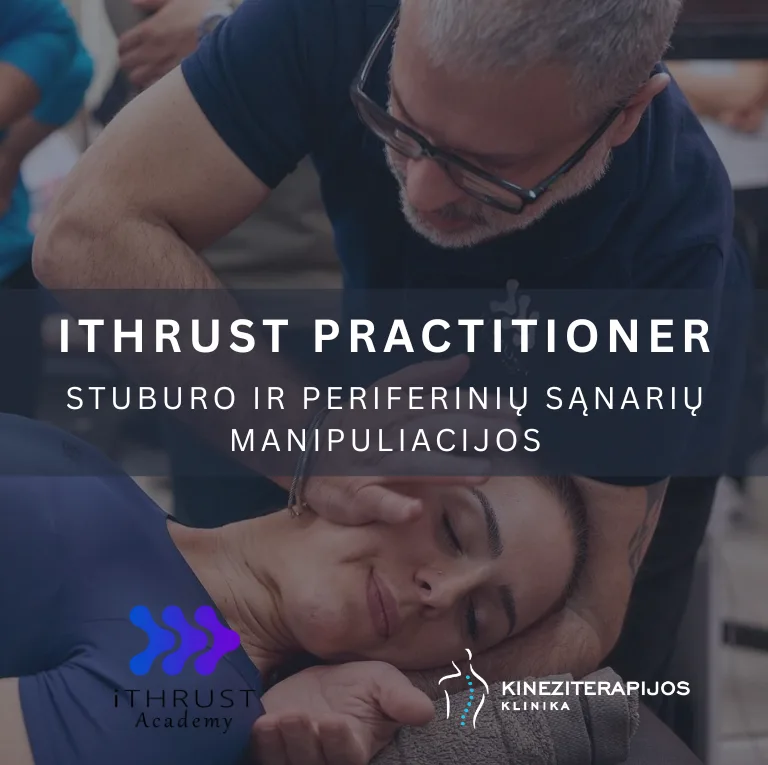
iTHRUST Practitioner. Spinal and peripheral joint manipulation
This seminar is a unique opportunity in Lithuania to acquire world-class knowledge without traveling abroad. This is the official entry level (Practitioner) in the iTHRUST clinical concept - an intensive 3-day practical-theoretical training for...
600 €Past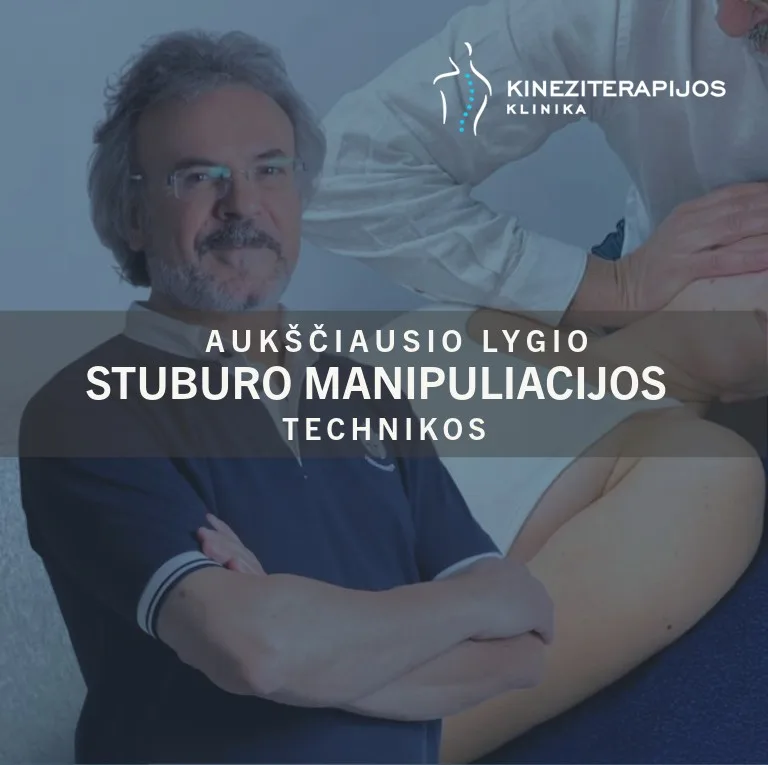
Advanced spinal manipulation techniques
The spine manipulation course is led by a highly qualified teacher and clinician, Prof. Juan José Boscà, with recognized experience and national and international recognition.
550 €Past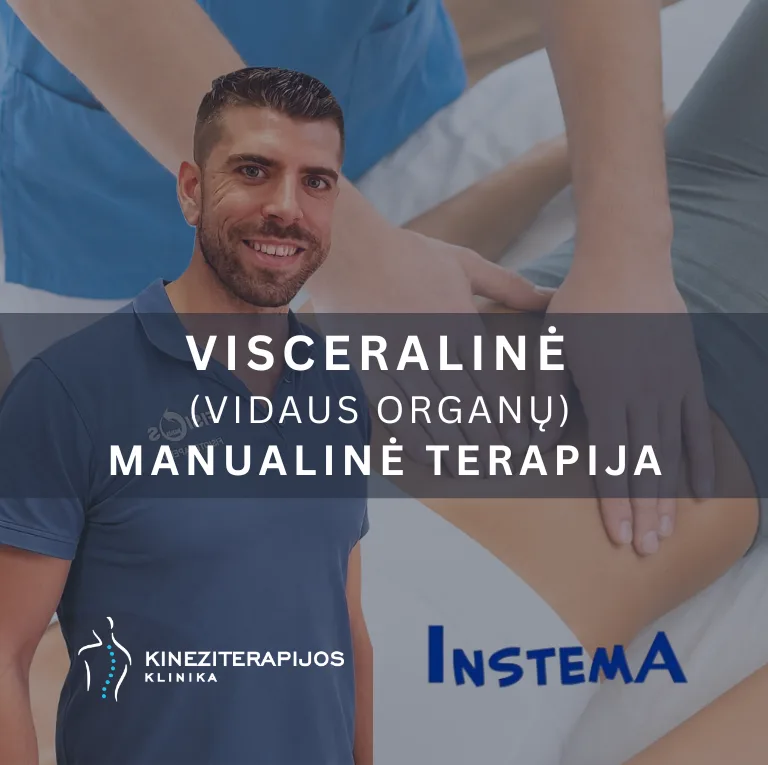
Visceral manual therapy
This seminar is very practically oriented and designed to deepen the knowledge of visceral (internal organs) manual therapy.
600 €Past